Yes, you can homeschool three days a week and still give your children an excellent education. This condensed schedule concentrates core academics into Monday through Wednesday (or any three consecutive days), freeing up the rest of the week for extracurriculars, co-ops, field trips, or simply breathing room for working parents and busy families. The approach works because homeschooling doesn’t require the same time commitment as traditional school. Without classroom management, transitions between classes, and lengthy administrative tasks, most families complete a full day’s lessons in three to four focused hours.
I stumbled into this schedule out of necessity when our family calendar exploded with activities and I was juggling freelance work. What started as a survival tactic became our preferred rhythm. My kids actually retained more because we weren’t spreading thin content across five days, and I had time to keep our home running without feeling like I was constantly behind on laundry, meals, and the never-ending clutter that seems to multiply when you’re home all day.
The biggest shift is mental. You’ll need to let go of the idea that learning only happens during formal “school time” and trust that those other four days offer their own educational value. Museum visits, nature walks, cooking together, even running errands become learning opportunities when you stop compartmentalizing education into a traditional framework.
What You’ll Need to Make 3-Day Homeschooling Work
You don’t need expensive curriculum packages or a dedicated schoolroom to make three-day homeschooling work, but you do need the right organizational foundation. Think of this as setting up the infrastructure that keeps both learning and household management running smoothly without constant firefighting.
Physical Organization Tools
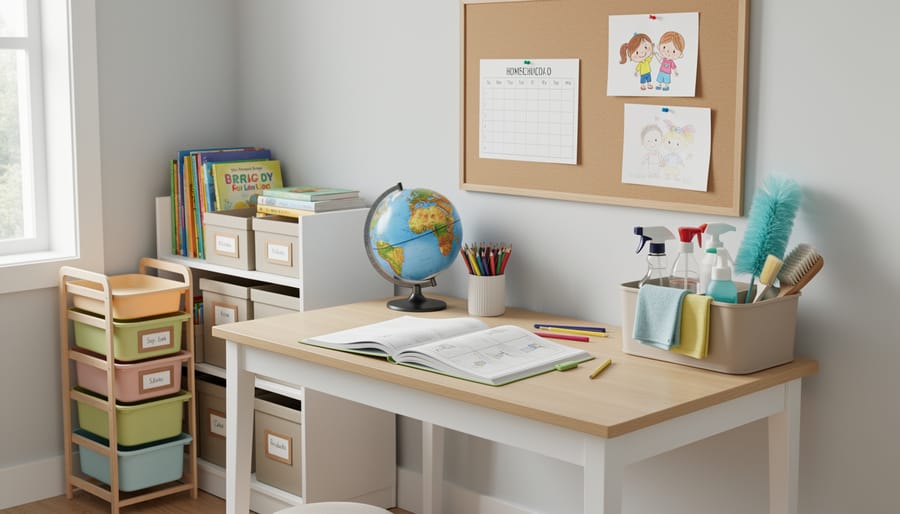
Your homeschool space doesn’t need to be Pinterest-perfect, but it should be functional. Here’s what actually matters:
- Clear bins or baskets for each child’s current materials (eliminates the “where’s my workbook?” scramble)
- Low shelving that children can access independently for books and supplies
- A portable cleaning caddy that moves room-to-room during your scheduled cleaning blocks
- Wall calendar or whiteboard for weekly planning visible to the whole family
- Timer (kitchen timer or phone) for focused work blocks and cleaning sprints
- Simple planner or planning sheets to map your three days and cleaning zones
The Bigger Shift: Your Mindset
Beyond the physical tools, you’ll need to embrace a different way of thinking about both homeschooling and housework. This isn’t about doing everything, it’s about doing what matters on the days that matter.
First, release the idea that learning only happens during formal lesson time. When your seven-year-old measures vinegar for the cleaning solution, that’s math. When she wipes down baseboards, she’s developing motor skills and work ethic. The integration isn’t a compromise; it’s actually richer education.
Second, accept that your house won’t look like a showroom, and that’s fine. The goal is “clean enough to be healthy, messy enough to be happy”, a space that supports your family’s life rather than draining your energy maintaining it. Three focused days of homeschooling paired with strategic cleaning beats seven days of half-hearted attempts at both.
Important Considerations Before You Start
Before you dive into a three-day homeschool schedule, let’s get realistic about what this approach actually demands. The biggest trap I see families fall into is treating those three days like a pressure cooker, cramming six subjects plus all the housework into marathon sessions that leave everyone exhausted. Your homeschool days should feel focused but sustainable, not like you’re running a sprint from breakfast to bedtime.
Legal requirements vary dramatically by location, so check your state’s homeschool laws before committing to any schedule. Some states have minimum instruction hour requirements that might affect how you structure your three days. For example, Washington homeschool hour rules specify certain annual totals that could influence your daily time blocks. Most states offer flexibility in how you meet these requirements, but you need to know what you’re working with.
When it comes to involving your children in cleaning, age-appropriateness matters more than efficiency. A six-year-old can absolutely wipe counters and sort laundry, but they’ll take three times longer than you would, and the results won’t be perfect. That’s the point. You’re building life skills, not running a professional cleaning service. Adjust your expectations accordingly.
Finally, recognize the difference between genuine household needs and anxiety-driven cleaning. If toys scattered across the living room stress you out but don’t actually interfere with learning or safety, maybe that’s okay on homeschool days. Save the deep cleaning for your off days, and give yourself permission to focus on what truly matters during school time.
Step-by-Step: Building Your 3-Day Homeschool and Cleaning Schedule
Choose Your Three Homeschool Days
The best homeschool days aren’t always the ones that look good on paper, they’re the ones that match your family’s actual energy patterns. Start by tracking when everyone naturally has the most focus and least external interruptions.
If you’re choosing between Monday-Wednesday-Friday versus three consecutive days, consider your weekly commitments first. Spread-out days work well when you have regular Tuesday-Thursday activities like co-ops, sports, or therapy appointments. They also give you built-in catch-up days between lessons, which helps if your kids need different pacing than a traditional kindergarten schedule.
Consecutive days like Monday-Tuesday-Wednesday create momentum for complex projects and keep information fresh, but they can feel intense without breaks. I’ve found Friday often works poorly for us because everyone’s mentally checked out by then.
Watch your family for two weeks before committing. Notice when tantrums spike, when you’re rushing, and when learning flows naturally. One mom I know switched to Tuesday-Thursday-Saturday after realizing Monday mornings were always chaotic with weekend recovery.
Your three days might look unconventional, Saturday could be your best homeschool day if you work weekdays. What matters is consistency, not conforming to a traditional school week.
Map Your Core Subjects and Cleaning Zones
The secret to this schedule is thinking in paired blocks: one subject gets one room. Monday morning might mean math at the kitchen table while you wipe counters between problem sets, then language arts in the living room where you straighten bookshelves during independent reading time.
Start by listing your must-teach subjects and your home’s main zones. Match them purposefully: science experiments happen in the kitchen where spills clean easily, art projects in the dining room where you can protect surfaces and tidy supplies afterward, reading in the family room where you can organize curriculum on nearby shelves while kids read independently.
Rotate deep-cleaning across your three days rather than cramming it into one exhausting marathon. Monday tackles bathrooms during handwriting practice (kids write while you scrub). Wednesday hits bedrooms during silent reading. Friday focuses on kitchen deep-cleaning during math drills. This rotation means each zone gets proper attention weekly without stealing your teaching time.
Daily tidying happens in five-minute bursts between subjects: reset the learning space, put materials away, do a quick sweep. These micro-cleanups prevent the avalanche that buries your schedule by Wednesday afternoon. The room you just taught in gets a fast reset before you move to the next subject and space, keeping chaos from building.
Integrate Children into the Cleaning Routine
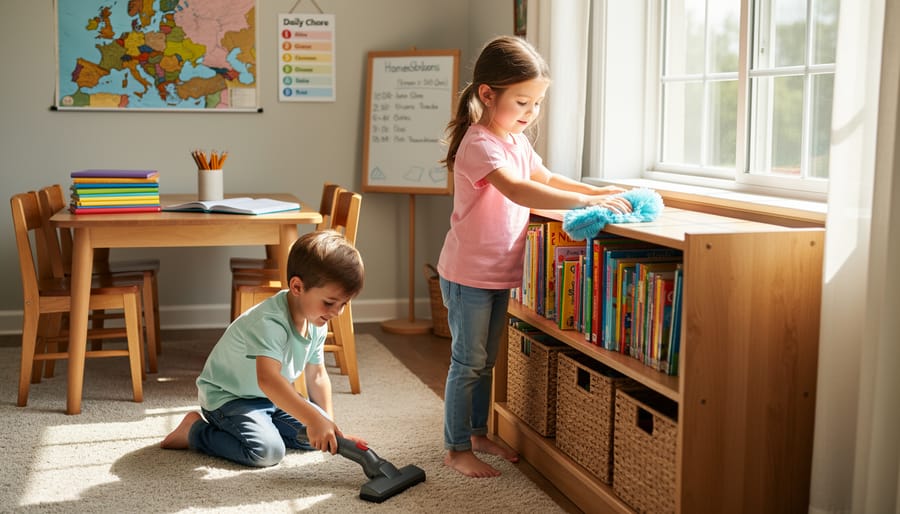
When you frame cleaning as part of the curriculum rather than an interruption, you transform what feels like a chore into legitimate learning time. My daughter learned fractions by measuring laundry detergent long before she mastered them on paper.
Start with tasks that naturally connect to current studies. Younger children (ages 5-8) can sort laundry by color while practicing classification skills, dust low surfaces with microfiber cloths, or organize books by category. These take five to ten minutes and integrate seamlessly into transition times between subjects.
Older students (ages 9-12) can tackle kitchen science through dishwashing (observing how soap breaks surface tension), calculate area when vacuuming rooms, or follow multi-step bathroom cleaning procedures that reinforce sequencing skills. These 15-20 minute tasks work well as brain breaks between challenging academic blocks.
Teens handle meal prep, complete laundry cycles independently, and manage their own room cleaning schedules, genuine life skills that many college-bound students lack. Frame these as non-negotiable competencies, not optional extras.
The key is keeping tasks age-appropriate and time-limited. A seven-year-old wiping counters shouldn’t derail your math lesson, and a twelve-year-old shouldn’t spend an hour deep-cleaning when you’ve scheduled science. Quick, focused contributions maintain momentum while building real competence.
Schedule Your Off Days Strategically
Those four non-homeschool days aren’t bonus school days in disguise. They’re the breathing room that makes your three-day schedule sustainable.
I learned this the hard way when I crammed our “off” days with makeup lessons, elaborate field trips, and aggressive cleaning marathons. Within a month, we were exhausted and resentful. The whole point of this schedule is flexibility, but I’d recreated the grind with different packaging.
Now I guard those days fiercely. Monday might be dentist appointments and grocery shopping. Thursday could be a library visit that turns into an impromptu nature walk. Friday? Sometimes we just need pajama-and-books morning while I tackle laundry without guilt.
The magic happens when you resist filling every hour. One planned activity per off day is plenty. The rest should flow naturally between catch-up tasks, spontaneous learning moments, and genuine rest. Your three intense homeschool days earn you this breathing space. Use it.
Sample Weekly Schedules That Balance Learning and Housework
Here’s what three days of homeschooling with an integrated cleaning routine looks like in real households. These aren’t perfect schedules, they’re working templates you can adapt.
Single Child Family (Ages 8-10)
Monday, Wednesday, Friday are homeschool days. Start at 9 AM with a quick kitchen reset while your child does independent reading. From 9:30 to 11:00, tackle core subjects at the kitchen table while a load of laundry runs. At 11:00, take a movement break and have your child wipe down bathroom sinks and mirrors (five minutes, tops). Return to learning until noon, then make lunch together while discussing what you’re reading in history or science. Afternoon hours cover art, nature study, or project work. One room gets deep-cleaned each homeschool day: Monday bathrooms, Wednesday bedrooms, Friday living areas.
Tuesday and Thursday handle errands, appointments, library trips, and any lessons taught by others. Saturday is catch-up for both schoolwork and housework. Sunday is rest.
Multiple Children Family (Ages 6, 9, and 12)
Same three-day pattern, but you’ll need rotating stations. While you work directly with your six-year-old on phonics, the older two complete independent work at the dining table. Everyone reconvenes for read-alouds and family subjects like history. Keep homeschooling journals at each child’s workspace so they can track what they accomplish while you’re helping a sibling.
Cleaning happens in teams. The twelve-year-old leads bedroom pickup after lunch while you supervise the younger ones in gathering laundry. Your nine-year-old can handle vacuuming main areas. Rotate who does what weekly so nobody gets stuck with toilets forever.
Working Parent Household
If you work part-time, homeschool Tuesday, Thursday, and Saturday. Kids do independent review work on your work days. Saturday becomes your intensive day for both academics and house reset. Sunday preps the week: meal planning, materials gathering, and a quick declutter.
If both parents work full-time but opposite schedules, the at-home parent handles homeschooling and housework simultaneously. The working parent takes over evening cleanup so the teaching parent doesn’t burn out.
How to Know Your System Is Working
You’ll know your three-day system is clicking when Monday morning doesn’t fill you with dread and your kitchen table actually stays clean and organized between lessons. I remember the week I realized we’d turned a corner: my daughter grabbed her math book without being asked, the living room floor was visible at dinnertime, and I hadn’t stress-cleaned at midnight in over two weeks. Those are your real success markers.
Watch for academic progress through completed work rather than hours logged. Can your kids explain what they learned yesterday? Are they moving through their curriculum at a reasonable pace for their age? That matters infinitely more than whether you hit every single planned activity. On the household front, baseline tidy beats pristine. You should be able to find clean dishes when you need them, walk through rooms without dodging piles, and have company over with fifteen minutes of pickup rather than three hours of panic cleaning.
If Sunday nights make you anxious or you’re constantly moving cleaning tasks to tomorrow, something needs adjusting. Common fixes: you’ve scheduled too much academics into each day (try cutting one subject), your cleaning expectations are too high (delegate or lower standards), or you picked the wrong three days for your family’s natural rhythm. When my neighbor switched from Monday-Wednesday-Friday to Tuesday-Wednesday-Thursday, everything smoothed out because Monday mornings were killing her momentum. Sometimes a small tweak makes all the difference.
Common Questions About 3-Day Homeschooling and Home Organization
Is three days a week really enough for a proper education?
Absolutely. Homeschooled children typically complete in 2-3 hours what takes 6-7 hours in a traditional classroom because there’s no transition time, waiting, or crowd management. Three focused days cover the same material more efficiently than five distracted school days.
What should we do on the non-homeschool days?
Use these days flexibly for field trips, library visits, appointments, passion projects, or simply catching up on household tasks and rest. They’re not “off” from learning, real education happens everywhere, but they’re free from formal lessons.
How do I keep the house from becoming a disaster on homeschool days?
Build quick resets into your schedule (10-minute tidy sessions between subjects) and involve kids in the process. A perfectly clean house isn’t the goal, a functional space that supports learning is.
What if we fall behind in our schedule?
Remember that homeschooling isn’t a race. If you miss a day or fall behind, simply adjust. The beauty of this model is its flexibility, you can add a fourth day one week or extend a unit that’s working well.
I hear one question more than any other: “But what about math?” Parents worry that skills requiring daily practice will suffer. Here’s what I’ve learned: consistency matters more than frequency. Three days of focused, quality math instruction often produces better results than five days of rushed, distracted practice. On your off days, let real-world math happen naturally, cooking measurements, money management, building projects. Your kids are still learning; they’re just not sitting at a workbook.
The cleaning concern runs a close second. Parents fear their homes will spiral into chaos without a five-day structure. In reality, the opposite happens. When you’re not exhausted from trying to maintain both homeschool and household perfection daily, you actually have energy for the tasks that matter. Your three focused days create rhythm, and the off days give you breathing room to tackle deeper cleaning or simply rest.
Some families worry about socialization with fewer structured days. Those non-homeschool days are perfect for park meetups, co-op classes, or playdates, social opportunities that fit naturally rather than feeling squeezed in after a long school day.
The beauty of homeschooling three days a week is that it’s entirely yours to shape. If Wednesday mornings turn out better than Fridays, switch them. If you discover your family needs more cleaning time or less, adjust. There’s no principal to consult, no permission slip required. The schedule serves you and your children, not the other way around.
I stumbled into this rhythm by accident when my carefully planned five-day schedule kept collapsing under the weight of real life. Those first few weeks of three-day homeschooling felt almost rebellious, like I was breaking some unwritten rule. But watching my kids actually enjoy learning again, and finding my kitchen counters clear more often than buried, showed me that less structure sometimes creates more space for what matters.
Your version of this system will look different from mine, and that’s exactly as it should be. Start with the framework here, then bend it until it fits your family’s actual life. The cleaning can wait an extra day. The lesson can stretch into tomorrow. The whole point of choosing homeschooling was this kind of freedom.
For more practical strategies and real-world encouragement as you build your homeschool rhythm, explore the other resources here at Sunny Patch. You’ve got this.