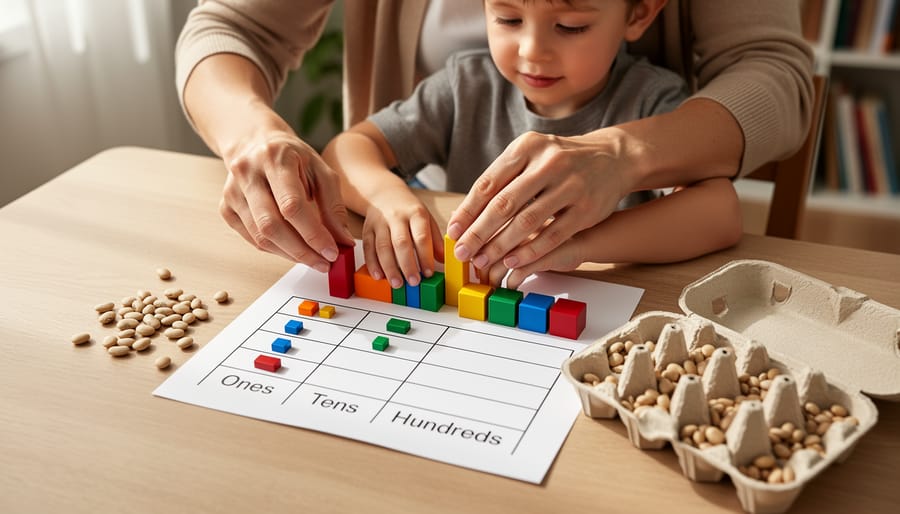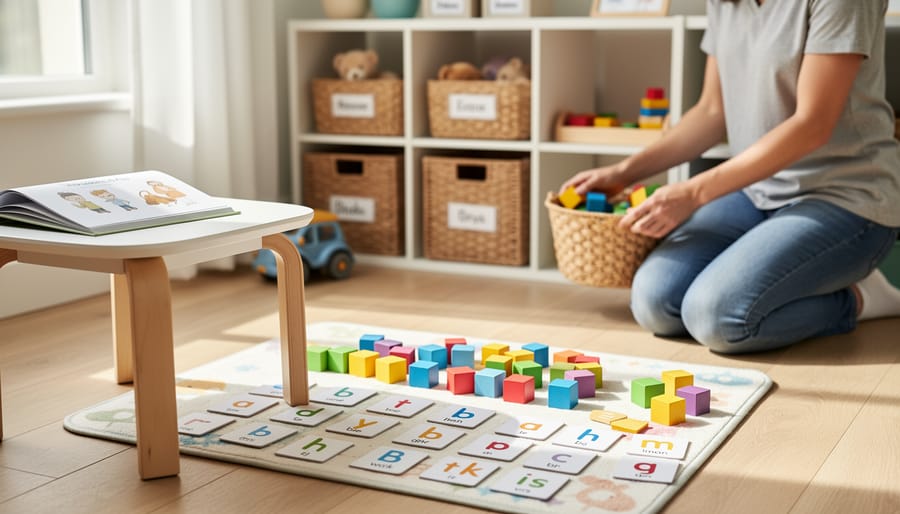
Creating an effective kindergarten homeschool schedule means building a flexible 2-3 hour daily structure that balances short learning bursts with plenty of hands-on activities and movement breaks. For five and six-year-olds, attention spans max out at about 15-20 minutes per subject, so your schedule needs to flow between activities quickly while still covering essential skills like phonics, early math, creative play, and physical movement.
I remember panicking during our first week of homeschooling kindergarten with my oldest, convinced we needed to replicate a traditional classroom experience. By Wednesday, we were both miserable. That’s when I learned the beautiful truth: kindergarten at home doesn’t need to look like school. What it needs is rhythm, not rigidity.
The secret to a successful kindergarten schedule isn’t cramming in more academics or perfectly timed transitions. It’s weaving learning into your existing household routines so both teaching and daily life can happen without constant chaos. When you integrate short lessons around meals, chores, and play, your child learns naturally while you maintain the home environment that supports everyone’s well-being.
This guide walks you through creating a practical kindergarten homeschool schedule that accounts for your child’s developmental needs and your household’s reality. You’ll discover the essential materials needed, age-appropriate activities that double as learning opportunities, and simple verification methods to ensure your kindergartener is progressing without resorting to worksheets and testing. Most importantly, you’ll learn how to adjust your schedule as you go, because what works in September rarely looks the same by February.
What You’ll Need to Create Your Kindergarten Schedule
You don’t need fancy equipment or expensive curriculum packages to build a functional kindergarten homeschool schedule. Most of what works lives in your junk drawer, your kitchen, and that basket of art supplies you’ve been meaning to organize.
Start with something to capture your plan. A digital calendar app works if you’re constantly on your phone anyway, but don’t discount a simple paper planner or even a spiral notebook dedicated to scheduling. I tried three different apps before realizing my kindergarteners responded better when they could see the physical schedule stuck to our refrigerator. Sometimes low-tech wins.
- Planning tool: digital calendar, printable template, or paper planner
- Age-appropriate learning materials: picture books, counting manipulatives, crayons, playdough
- Child-safe cleaning supplies: small dustpan and brush, spray bottle with water, microfiber cloths
- Visual schedule cards or chart with pictures
- Timer or visible clock
- Storage bins or baskets labeled with pictures
Visual schedule cards changed everything in our house. I printed simple pictures showing each activity, circle time, snack, cleanup, outdoor play, and laminated them with clear packing tape. My five-year-old could see what came next without asking me seventeen times. It’s a powerful organization tool that gives kindergarteners independence.
For cleaning supplies, stick with what’s safe: a small dustpan they can actually lift, spray bottles filled with plain water for “cleaning” windows, and washable cloths. Resist the urge to buy miniature versions of everything. Regular household items work fine when sized appropriately.
A kitchen timer became our best friend during transitions. Five minutes to clean up toys feels manageable when a kindergartener can see the time counting down. We used a cheap digital one from the dollar store for two years before it finally died.
Storage matters more than you’d think. Clear bins let kids see what belongs where, and picture labels eliminate the reading requirement. We kept one bin for math materials, one for art supplies, and one for books we’d read that week.
Important Things to Know Before You Start
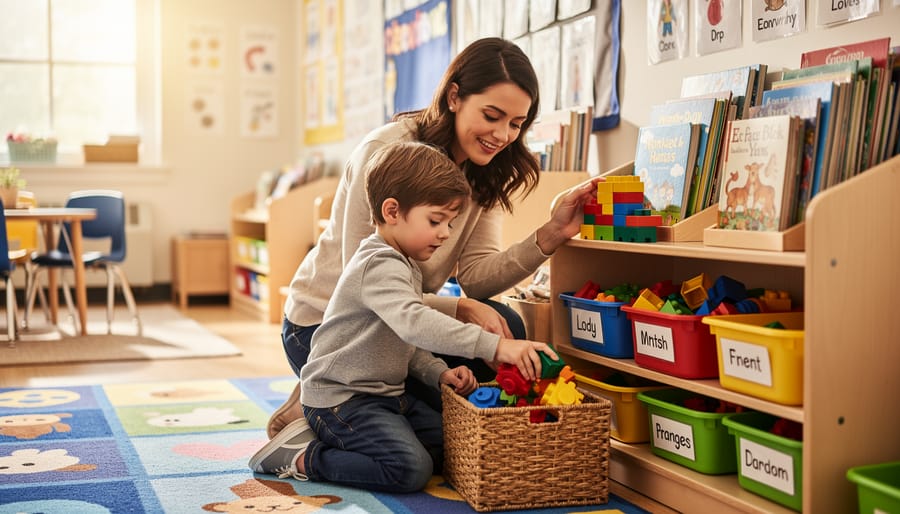
Before you dive into creating your kindergarten schedule, let’s talk about realistic expectations. I learned this the hard way during our first year: five-year-olds aren’t mini-adults who can focus for hour-long blocks. Their attention span maxes out around 15-20 minutes for structured activities, and that’s perfectly normal. Plan your learning blocks accordingly, switching between activities before fidgeting sets in.
Flexibility isn’t just nice to have; it’s essential. Some mornings your kindergartener will wake up ready to tackle letter sounds and counting games. Other days, you’ll face meltdowns over which crayon to use. Keep daily routine notes about what actually happened versus what you planned, and you’ll spot patterns that help you adjust.
The cleaning tasks you integrate must be genuinely age-appropriate. Kindergarteners can wipe tables with damp cloths, sort toys into labeled bins, and put books on low shelves. They cannot safely handle cleaning chemicals, reach high storage, or organize complex systems. Keep cleaning supplies non-toxic and accessible tasks simple.
Here’s what I wish someone had told me: perfectionism will destroy your homeschool joy faster than anything else. Your schedule will fall apart some days. Your house won’t always be tidy. Your kindergartener will resist cleanup time. This doesn’t mean you’re failing. The goal is creating a gentle framework that brings more peace than chaos to your days, not achieving Instagram-worthy perfection. Keeping expectations realistic helps prevent homeschool burnout before it starts.
Step-by-Step: Building Your Kindergarten Homeschool Schedule
Step 1: Map Out Your Non-Negotiables
Start with the things that absolutely must happen each day, regardless of what else is going on. These are your anchor points.
Grab a piece of paper and write down when your family naturally wakes up, not when you wish you woke up. My kindergarteners were early risers whether I liked it or not, so I built around that reality. Next, mark your meal times. Most families eat breakfast, lunch, and dinner at roughly the same time each day.
Add your child’s quiet time or nap if they still take one. Even kindergarteners who don’t nap benefit from an hour of quiet play in their room. This gives you a mental break too.
Don’t forget outdoor play. Young children need to move their bodies, and scheduling it prevents the day from slipping away indoors. I found that mid-morning outdoor time before lunch worked beautifully for burning off energy.
Finally, note your bedtime routine starting time. Everything else in your schedule will fit around these fixed points, creating a framework that feels predictable for both you and your child.
Step 2: Block Out Learning Time
With your non-negotiables marked on your schedule, you’re ready to add the heart of your homeschool day: actual learning time. For kindergarteners, this doesn’t mean marathon study sessions. You’re looking at 1-2 hours total, broken into bite-sized chunks.
Here’s what works: three to four learning blocks of 15-20 minutes each. That’s genuinely all a five or six-year-old can handle before their brain needs a break. I learned this the hard way when my first kindergartener melted down 35 minutes into what I’d planned as an hour-long “morning lesson block.” Shorter works better.
Mid-morning is your sweet spot, usually between 9:00 and 11:30 AM. Kids have burned off some early energy but haven’t hit the pre-lunch slump yet. Try clustering your learning blocks during this window.
What goes in these blocks? Rotate between activities: ten minutes of phonics practice, fifteen minutes of math with manipulatives, twenty minutes of read-aloud time, fifteen minutes of science exploration or art. The variety keeps them engaged, and the short duration prevents frustration.
Don’t stack all learning back-to-back. Space your blocks with movement breaks, snack time, or yes, those quick cleanup tasks we’ll discuss next.
Step 3: Integrate Age-Appropriate Cleaning Tasks
Now layer in the cleaning tasks that make this schedule work for your whole household. The secret is treating these moments as natural extensions of your kindergarten activities, not separate chores.
Start with immediate cleanup after each learning block. When circle time ends, your kindergartener puts the picture books back on the shelf. After math manipulatives, those colorful counting bears go into their labeled bin. This “finish and reset” pattern teaches that activities have a beginning, middle, and end, a crucial executive function skill for five-year-olds.
Meal preparation offers perfect organization opportunities. A kindergartener can absolutely set napkins at each place, put cups on the table, or arrange fruit on a plate. These tasks build motor skills while keeping your kitchen routine moving forward.
Art time cleanup deserves special attention since it generates the most mess. Keep a damp cloth within reach, designate a specific spot for drying paintings, and have your child wipe down the table before moving to the next activity.
The key is consistency, not perfection. When putting away books becomes as automatic as reading them, you’ve built a sustainable rhythm. Your kindergartener learns responsibility through natural consequences, we can’t start the next fun thing until we’ve tidied up this one, without lectures or battles.
Step 4: Build in Transition and Reset Times
Between each learning block and daily activity, build in five to ten minutes just for cleanup and transition. These short buffers are your secret weapon against the mid-afternoon disaster zone.
Right after circle time ends, set a timer for seven minutes. Your kindergartener puts away letter cards, returns cushions to the reading corner, and grabs their water bottle before math games begin. That’s it. Nothing fancy, but it stops the snowball effect where toys from three activities pile up by lunch.
I learned this the hard way when our mornings routinely ended with me stepping on magnetic letters while trying to make sandwiches. Now we treat these reset moments like part of the schedule itself, not optional. My daughter actually enjoys racing the timer to clear her workspace.
Mark these transitions directly on your visual schedule with a cleanup icon. Think of them as mini refresh points that keep both learning flow and home order intact throughout your homeschool day.
Step 5: Create Visual Cues for Your Child
Kindergarteners can’t tell time yet, but they absolutely understand pictures. Create simple visual cues that show what happens next in your day.
Grab index cards or print free templates online. Draw or paste pictures for each activity: a book for reading time, a broom for cleanup, a plate for lunch. Arrange them on a wall chart or clip them to a ribbon at your child’s eye level.
Let your kindergartener move a clothespin down the schedule or flip cards as they complete each task. This gives them ownership and builds independence without constant reminders from you.
I laminated our cards and added velcro dots. My daughter loved peeling off the “toy cleanup” card and sticking it in the “done” column. That small act of moving the card made tidying up feel like an accomplishment instead of a chore.
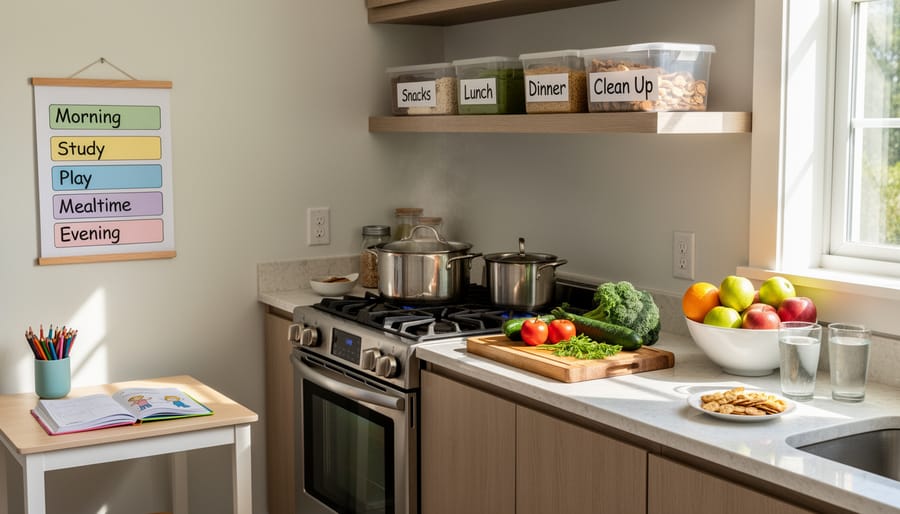
Sample Kindergarten Homeschool Schedule With Built-In Organization
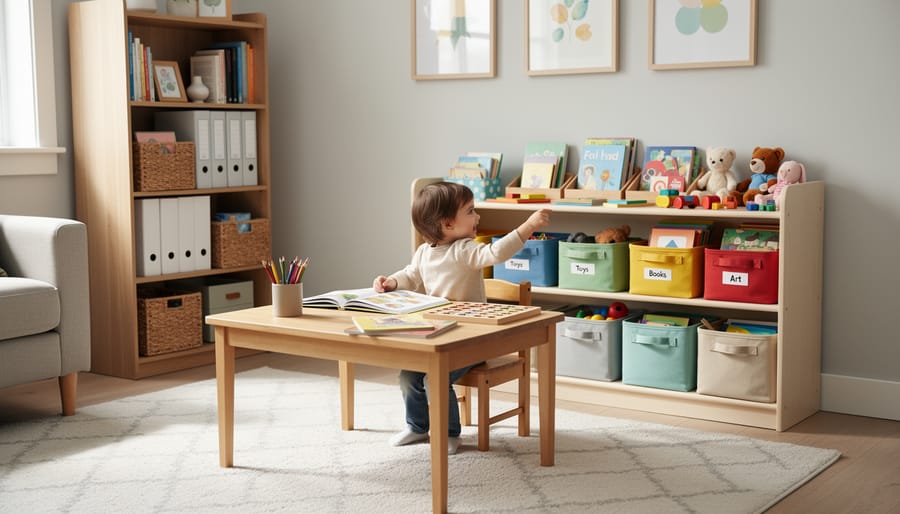
Here’s what a realistic kindergarten homeschool day looks like when you intentionally weave organization into your learning rhythm. This sample schedule balances focused academics with natural cleanup moments, creating a day that feels manageable rather than chaotic.
Morning Block (8:00 AM, 12:00 PM)
8:00, Wake up, breakfast, get dressed
8:30, Morning cleanup: make bed, put pajamas away
9:00, Circle time (calendar, weather, story, song)
9:20, Phonics or letter work
9:35, Quick reset: put away learning materials, stretch break
9:45, Math manipulatives or counting games
10:00, Snack time
10:15, Child helps wipe table and put dishes in sink
10:20, Art or creative project
10:45, Cleanup art supplies together, organize markers by color
11:00, Outdoor play or gross motor activity
11:45, Come inside, put away outdoor toys, wash hands
12:00, Lunch
Afternoon Block (12:00 PM, 5:00 PM)
12:30, Child clears own plate, helps load dishwasher
12:45, Quiet time: audiobooks, puzzles, or independent play
1:45, Read-aloud time with Mom or Dad
2:15, Science exploration or hands-on activity
2:45, Put away science materials, tidy learning space
3:00, Free play (building blocks, dolls, dress-up)
4:00, Toy pickup before dinner prep
4:15, Help set table for dinner
5:00, Dinner prep time (child plays independently nearby)
Notice how cleanup tasks follow naturally after activities rather than piling up until bedtime. This rhythm helps you track what works and adjust as you go. Your actual times will shift based on your family’s wake-up routine, nap needs, and when older siblings require attention, but this structure gives you a starting framework that keeps both learning and organization flowing smoothly throughout the day.
Making Sure Your Schedule Actually Works
Give your schedule a solid week before making any changes. I learned this the hard way when I scrapped a perfectly good routine after just two chaotic days, only to realize later that we’d all been adjusting to something new. Track what’s happening in your homeschooling journals or a simple notebook: which activities your kindergartener completes independently, when meltdowns happen, what time of day cleaning tasks feel natural versus forced.
Watch for these green flags: your kindergartener starts moving to the next activity without being told, toys actually make it back to their spots most days, you’re not redoing their cleanup work, and you have energy left for spontaneous moments. Red flags include constant resistance to every transition, mounting clutter despite the schedule, and feeling more stressed than before you started.
When something isn’t working, tweak one element at a time. Maybe learning time needs to shift earlier, or the cleanup task after art projects is too complex. Sometimes the schedule itself is fine but the visual cues need to be clearer, or a particular transition needs more time.
As your kindergartener grows, expect to revise every few months. What works in September often needs adjusting by January. Their attention span will lengthen, they’ll handle more complex tasks, and your rhythm will naturally evolve. That’s growth, not failure.
Common Questions About Kindergarten Homeschool Schedules
How rigid should my kindergarten homeschool schedule be?
Think of your schedule as a flexible framework, not a strict timetable. If circle time runs long because your child is deeply engaged in a book, that’s a win worth protecting. The schedule exists to serve your family, not the other way around.
What if my child resists cleanup time?
Make cleanup playful rather than punitive. Set a timer and challenge them to beat the clock, sing a cleanup song, or turn it into a game where toys “go to sleep” in their homes. When cleanup becomes part of the routine rather than an interruption, resistance typically fades within a week or two.
How do I handle days when nothing goes as planned?
Accept that off days are normal, especially with young children. When the schedule falls apart, focus on your non-negotiables (meals, rest time, bedtime) and let the rest go. Tomorrow is a fresh start, and beating yourself up helps no one.
Can I use this schedule framework with multiple children?
Absolutely, though you’ll need to adjust activity blocks to accommodate different ages. Your kindergartener’s learning time can overlap with an older child’s independent work, while younger siblings might have parallel play time. The cleanup routines actually work better with multiple kids since they can help each other.
Beyond these common concerns, many parents wonder about balancing structured learning with the free play kindergarteners desperately need. Your schedule should protect at least two to three hours of unstructured time daily where your child can build, imagine, and explore without adult direction. This isn’t wasted time; it’s when crucial cognitive development happens.
Some families find that keeping learning reflections helps them spot patterns in what’s working and what needs adjustment. A simple notebook where you jot down which activities captured attention and which cleanup transitions went smoothly can reveal insights you’d otherwise miss in the daily blur.
Remember that your kindergartener’s schedule will evolve. What works in September might need tweaking by January as attention spans grow and skills develop. Give yourself permission to experiment, adjust, and even scrap the whole thing if it’s not serving your family anymore.
Creating a kindergarten homeschool schedule that keeps your home clean and organized isn’t about achieving perfection. It’s about building a rhythm that brings peace to your days and helps your child learn while maintaining some sense of order.
I remember those early homeschool years when I felt like I was drowning in both lesson plans and laundry. The turning point came when I stopped trying to do everything perfectly and started focusing on simple, sustainable routines. A basic schedule that integrated learning time with quick cleanup moments changed everything. My kindergartener knew what came next, I wasn’t constantly stressed about the mess, and we actually enjoyed our homeschool days instead of just surviving them.
Your schedule will look different from mine, and that’s exactly how it should be. Start with just one or two elements that address your biggest pain points. Maybe that’s a consistent morning routine or adding a five-minute toy pickup after each learning block. Build from there, adjusting as you discover what works for your family.
Give yourself grace. Some days will flow beautifully, and others will fall apart by 9 a.m. Both are part of the homeschool journey, and both teach valuable lessons.