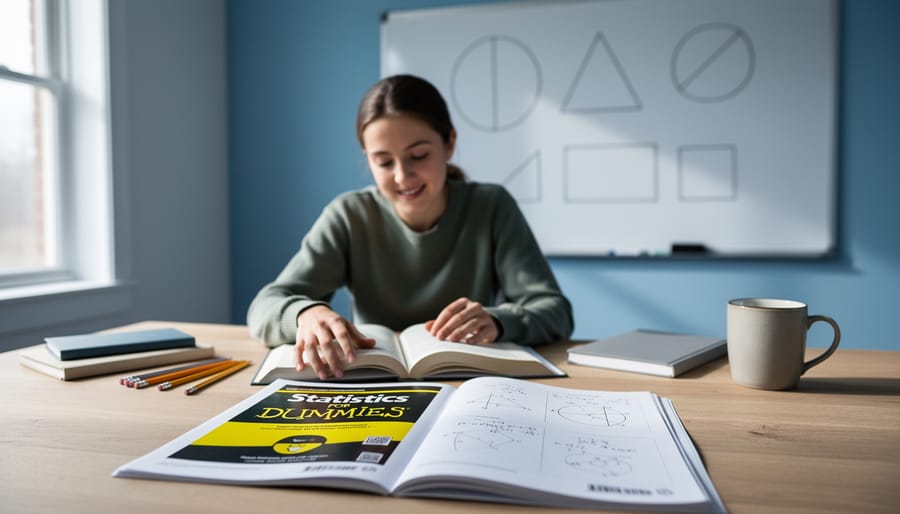
Statistics For Dummies is a comprehensive guidebook by Deborah J. Rumsey that breaks down statistical concepts into plain language, designed for readers who find traditional statistics textbooks overwhelming or confusing. For homeschool parents who feel intimidated by teaching math beyond basic arithmetic, this resource offers a lifeline: it explains everything from probability and distributions to hypothesis testing without assuming you already have a math degree.
I remember the first time a parent asked me about teaching high school statistics at home. She looked genuinely panicked. “I barely passed my college stats class,” she admitted. “How am I supposed to teach this?” That’s exactly the situation this book addresses. It doesn’t talk down to you, but it also doesn’t assume you remember what a standard deviation is or why anyone should care about p-values.
The book currently retails at $29.97 for the paperback version and $28.47 for the Kindle edition, making it an affordable addition to your homeschool curriculum. What makes it particularly valuable for teaching purposes is that Rumsey structures each chapter around real-world applications, the kinds of examples that actually make sense when you’re trying to explain why statistics matter. Your teen won’t just memorize formulas. They’ll understand how statistical thinking applies to interpreting news headlines, evaluating scientific claims, and making informed decisions.
This article will walk you through what the book covers, how you can use it as a teaching tool in your homeschool, and practical strategies for integrating statistical literacy into your curriculum without the stress.
What Statistics For Dummies Really Means
Statistics For Dummies isn’t about dumbing anything down, it’s about making a genuinely challenging subject accessible without the academic gatekeeping. Deborah J. Rumsey wrote this book for people who find themselves needing statistics but never had a proper introduction, or for those who suffered through a confusing course and want a do-over that actually makes sense.
The book assumes you’re starting from scratch. You don’t need calculus, you don’t need a math degree, and honestly, you don’t even need to be particularly good at math. What you do need is curiosity and a willingness to work through examples that connect abstract concepts to real situations you already understand, tracking your grocery spending, interpreting medical test results, or figuring out whether your teen’s basketball team really has a home-court advantage.
The “For Dummies” approach relies on clear explanations with a touch of humor (because let’s be honest, statistics can be dry), tons of worked examples, and a conversational tone that feels more like a patient tutor than a textbook. Rumsey doesn’t talk down to readers; she talks them through.
As you work through the book, you’ll encounter terms that sound intimidating but become surprisingly manageable once you see what they actually do:
- Mean
- The average you calculate by adding up all your numbers and dividing by how many you have, useful for everything from test scores to monthly expenses.
- Median
- The middle value when you line up your numbers in order, which tells you what’s typical without getting thrown off by extremes like one unusually high or low number.
- Probability
- The chance of something happening, expressed as a fraction or percentage, like the odds your student will finish their math assignment before dinner.
- Standard Deviation
- A measure of how spread out your data is from the average, showing whether results cluster tightly or vary widely.
For homeschooling parents worried about teaching upper-level math, this book offers something liberating: you don’t have to be the expert before you start. You can learn alongside your teen, one chapter at a time, building confidence together as the concepts click into place.
How Statistics For Dummies Works as a Teaching Tool
Learning Alongside Your Teen
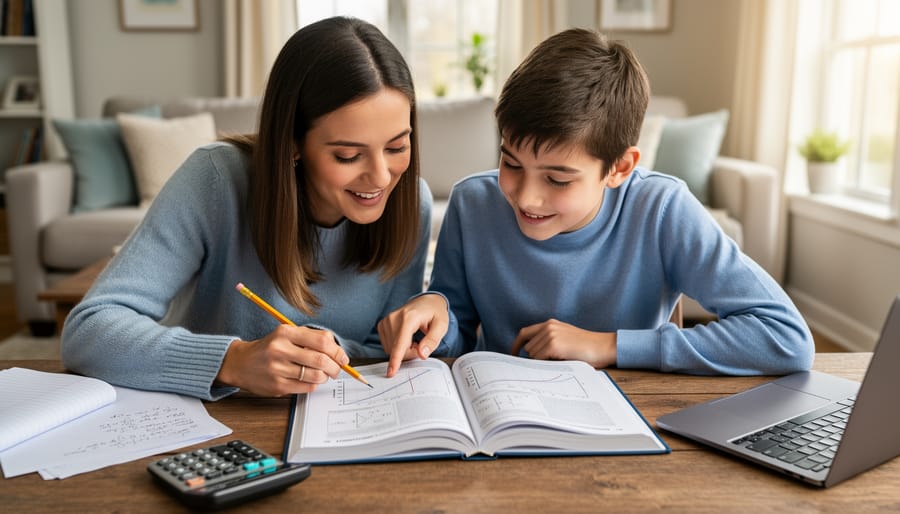
Here’s the thing about teaching statistics to your teen: you don’t need to be an expert yourself. I remember sitting down with Statistics For Dummies the summer before my daughter started high school math, feeling that familiar knot of anxiety. What if she asks a question I can’t answer? What if I’ve forgotten everything I once knew?
The solution turned out to be simpler than I expected. Read one chapter ahead of your student. That’s it. When you’re only a chapter ahead, you’re learning the material fresh, thinking through the same questions they’ll have, and discovering the concepts together. This approach transforms you from all-knowing instructor (pressure!) into fellow learner (manageable!). Your teen sees that learning continues at every age, and you’re modeling exactly what you want them to do: tackle unfamiliar material with curiosity instead of fear.
The beauty of Deborah J. Rumsey’s writing is that she explains concepts clearly enough for adults who haven’t thought about standard deviation in decades. You’ll find yourself understanding statistics better now than you did in school, which makes those dinner table conversations about probability or data interpretation surprisingly natural. Some of my best teaching moments came from admitting, “I just learned this myself yesterday, and here’s what finally made it click for me.”
Using It as a Curriculum Supplement
You don’t need to overhaul your entire math curriculum to add statistics. Statistics For Dummies slots comfortably alongside whatever program you’re already using, think of it as the bridge between algebra and real-world number sense.
If your teen is working through Saxon, Teaching Textbooks, or another standard high school math sequence, use this book during the second semester of Algebra II or early pre-calculus. Assign one or two chapters per week while they continue their regular lessons. The book’s self-contained chapters mean you can jump to probability when they’re studying it in their main text, then circle back to data analysis later.
For families who want statistics as a standalone course, perhaps for a college-bound junior who’s finished Algebra II, the entire book becomes your curriculum. Work through it chapter by chapter at whatever pace suits your student. A motivated learner might finish in one semester; someone who needs more processing time can stretch it across a full year without losing continuity.
The beauty here is flexibility. No rigid scope-and-sequence chart, no prerequisites beyond basic algebra. Your hockey-obsessed daughter can spend extra time on probability and hypothesis testing because she wants to analyze game stats. Your slower-paced learner can master descriptive statistics thoroughly before moving forward. You set the timeline that actually works.
What Topics and Concepts It Covers
Statistics For Dummies walks you through the essential concepts you’d typically encounter in a high school or introductory college statistics course, presented in manageable chunks. The book covers:
- Data collection and organization
- Measures of center and spread
- Probability basics
- Distributions
- Sampling
- Confidence intervals
- Hypothesis tests
Deborah Rumsey dedicates chapters to descriptive statistics, where students learn to summarize data sets using mean, median, mode, and range. The book explains how to find an outlier and why it matters for accurate analysis. You’ll find practical guidance on creating and interpreting graphs, histograms, scatterplots, boxplots, that turn raw numbers into visual stories.
The probability section breaks down concepts like relative frequency and theoretical probability without drowning students in formulas. Later chapters tackle hypothesis testing and confidence intervals, topics that feel intimidating but become surprisingly approachable through real-world examples. The scope is comprehensive enough for college-bound students while remaining accessible for teens just starting their statistics journey. Rumsey includes practice problems after each concept, so your homeschooler can test understanding before moving forward.
Where Statistics Fits in Your Homeschool
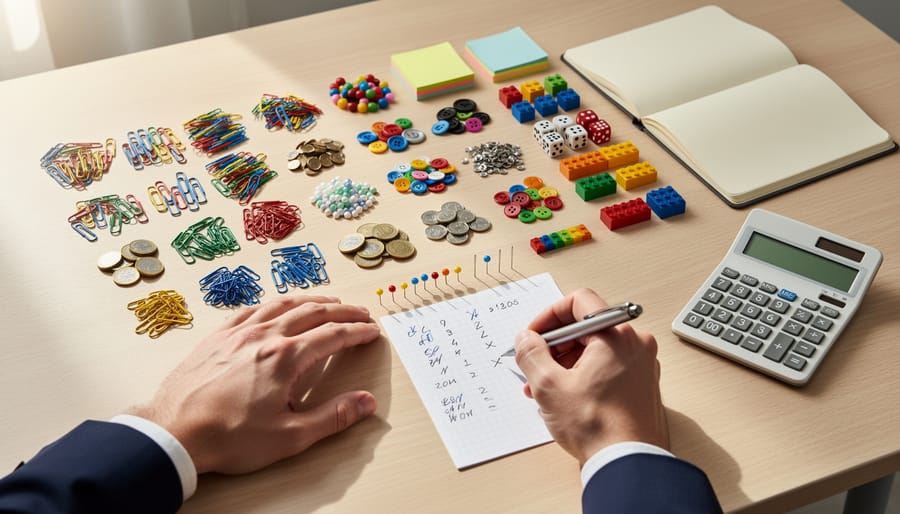
Statistics belongs in your homeschool when your teen is ready for advanced math thinking, typically around grades 9 through 12. If your student has completed Algebra I, they possess the foundation needed to tackle statistical concepts. That said, you can weave statistical thinking into earlier years through simple data collection activities like tracking weather patterns or analyzing family spending habits.
The beauty of teaching real-world statistics is how naturally it connects to subjects your kids already study. Science experiments generate data that needs interpretation. History lessons become richer when students analyze population trends or economic patterns. Even everyday decisions, comparing product reviews, evaluating news claims, understanding poll results, require statistical literacy.
For college-bound students, statistics offers significant advantages. Many universities recognize it as fulfilling a math requirement, and certain majors (psychology, biology, business, social sciences) expect incoming students to understand basic statistical concepts. Beyond admission requirements, statistical thinking sharpens critical reasoning skills that serve students across all academic disciplines.
Is statistics required for high school?
While not universally required, statistics is increasingly recommended for college preparation and counts as a rigorous math credit on transcripts.
Can younger students learn statistics?
Elementary and middle schoolers can explore basic concepts like graphs, averages, and probability through hands-on activities, though formal study typically begins after Algebra I.
How does statistics differ from algebra?
Algebra focuses on solving equations and abstract relationships, while statistics emphasizes interpreting real data, understanding variability, and making informed conclusions from evidence.
When considering homeschool planning statistics fits beautifully as either a full-year course for juniors or seniors, or as a semester elective paired with another math topic. The practical nature of the subject means your teen will use these skills immediately, analyzing sports statistics, understanding medical information, or evaluating financial choices long before college entrance exams arrive.
Getting Your Hands on Statistics For Dummies
You’ll find Statistics For Dummies readily available through Amazon, with options to suit different learning preferences and budgets. The paperback edition costs $29.97, perfect if you prefer a physical book you can highlight and tab for quick reference during teaching sessions. If you’re looking for instant access or like reading on a tablet, the Kindle Edition runs $28.47 and downloads immediately to your device.
For Canadian homeschoolers, carries both versions with delivery available across the country, including locations like Balzac T4B 2T. The paperback currently shows limited stock (9 copies available with more on the way), so if you prefer the physical book, you might want to order sooner rather than later. The digital version eliminates any wait time, which can be handy if you’re starting a statistics unit next week or your teen just expressed interest in learning the subject.
Either format gives you the complete book, so your choice really comes down to how you and your student work best. Some families keep the physical copy as their main teaching resource and grab the Kindle version for review on road trips or doctor’s office waiting rooms.
Making Statistics Less Intimidating
I’ll be honest with you: the first time my oldest needed statistics for a science fair project, I felt that familiar knot in my stomach. You know the one. The same feeling you get when your child asks a math question and you’re suddenly calculating how to explain something you haven’t thought about since college. I kept thinking, “How can I possibly teach this when I barely understand it myself?”
That fear is real, and you’re not alone in feeling it.
Here’s what I discovered: statistics becomes far less scary when you stop thinking of it as advanced mathematics and start seeing it as organized common sense. You already use statistical thinking every day. When you compare prices at the grocery store, track your household budget, or notice patterns in your child’s learning progress, you’re thinking statistically.
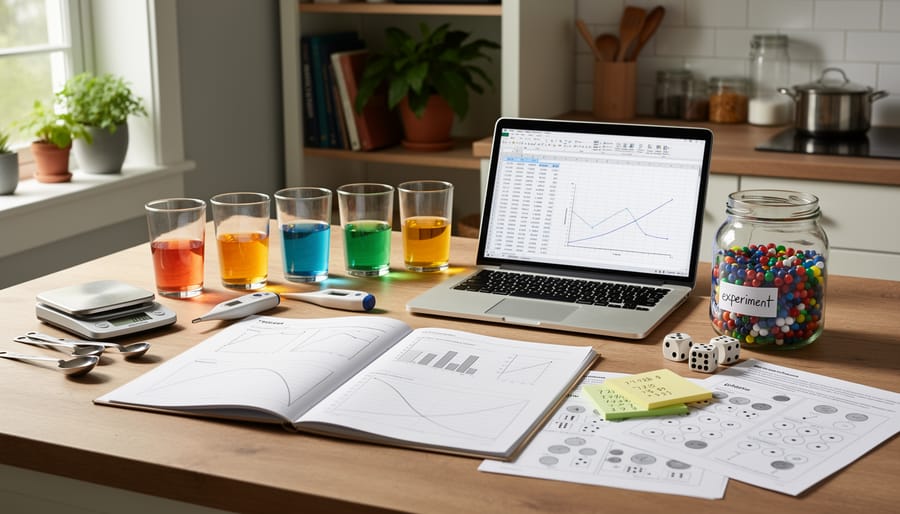
Start with concepts your family already encounters. Sports statistics are everywhere in our house, from batting averages to playoff predictions. Family budgets teach percentages and averages naturally. Even simple science experiments, like tracking plant growth or weather patterns, introduce data collection and interpretation without the intimidation factor.
The key is taking small steps. Don’t aim to master probability theory in a week. Pick one chapter from Statistics For Dummies and work through it together. When your teen sees you learning alongside them, struggling with the same concepts, two things happen: the pressure lifts from both of you, and the subject transforms from a solitary mountain to climb into a shared journey.
Celebrate the small wins. Your child graphed data correctly? That’s progress worth acknowledging. You finally understand what a standard deviation actually means? That deserves recognition too.
You’ve already proven you can homeschool through countless other challenges, teaching statistics is no different. Statistics For Dummies strips away the mystique that makes this subject feel unreachable. Deborah J. Rumsey’s clear, humor-laced approach transforms what looks like advanced math into something you and your teen can tackle together, one concept at a time.
The beauty of homeschooling lies in your ability to choose resources that actually work for your family. Whether you grab the paperback for $29.97 to mark up and dog-ear, or go with the Kindle Edition at $28.47 for instant access, you’re investing in more than a statistics book. You’re showing your children that difficult subjects become manageable when broken into understandable pieces, that learning happens at any age, and that confidence grows through practice rather than perfection.
Start with Chapter One. Read it yourself, then read it with your student. Ask questions together. Laugh at the missteps. Statistics isn’t reserved for people with math degrees. It’s for families brave enough to learn something new, and that’s exactly what you’re already doing every day in your homeschool.