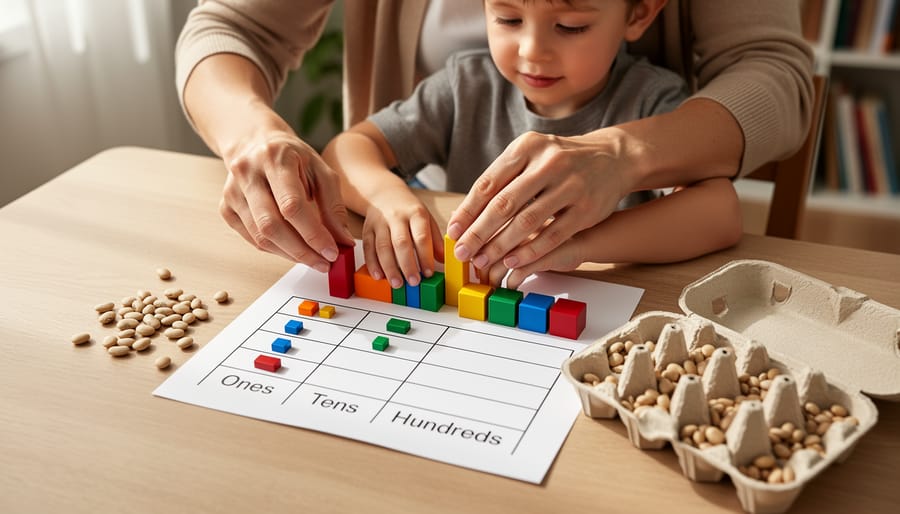
A homeschooling journal is your written record of what you’re learning, experiencing, and accomplishing throughout your homeschool journey. It serves as both documentation for legal requirements and a meaningful keepsake that captures the real story of your family’s education. Whether you’re keeping a simple daily log, a subject-specific notebook, or a creative scrapbook-style journal, the core purpose remains the same: tracking progress while preserving memories that standardized test scores could never capture.
When I started homeschooling fifteen years ago, I thought journaling meant writing lengthy lesson plans and detailed assessments. I was wrong. The most valuable journals I’ve kept are the messy ones filled with spontaneous field trip notes, funny things my kids said during science experiments, and those breakthrough moments when a concept finally clicked. These aren’t just records for the state. They’re proof that learning happens everywhere, not just during formal lesson time.
You don’t need a special system or expensive planner to start. A simple notebook works perfectly. The real power of homeschooling journals lies in consistency, not perfection. Ten minutes at the end of each day or week makes a remarkable difference over time. You’ll document educational activities you’d otherwise forget, spot patterns in what’s working or struggling, and create a narrative that helps you explain your homeschool to skeptical relatives or comply with your state’s requirements. Most importantly, you’ll give yourself permission to see progress in places traditional report cards miss entirely.
What Homeschooling Journals Actually Are (And What They’re Not)
When I started homeschooling, I thought a homeschooling journal was just another checkbox on the legal compliance list, a log of subjects and hours to satisfy state requirements. I couldn’t have been more wrong.
A homeschooling journal is actually a living document that captures your family’s unique learning journey. Think of it as part memory book, part learning lab notebook, and part progress tracker rolled into one. It’s where you document not just what you covered, but how your child’s eyes lit up during that impromptu nature walk, the breakthrough moment when fractions finally clicked, or the afternoon when everything fell apart and you all ended up making cookies instead.
The beauty of homeschooling journals is that they come in different forms, and there’s no single right way to keep one. Some parents maintain their own journals, recording observations, curriculum notes, and reflections on what’s working or needs tweaking. Student journals give kids space to express their own learning experiences through writing, sketching, or pasting in favorite work samples. Family journals become collaborative projects where everyone contributes, creating a shared record of your homeschool adventure together.
Let me clear up some common misconceptions. Homeschooling journals aren’t just for states with strict recordkeeping requirements in Pennsylvania or similar regulations. They’re for you, to remember, reflect, and recognize progress. They’re not reserved for organized, “perfect” homeschoolers with matching lesson planners and tidy schoolrooms. If anything, they’re most valuable for those of us navigating the messy, beautiful reality of learning at home.
Your journal doesn’t need fancy formatting or complete daily entries. It just needs to be honest and yours.

Why Keeping a Homeschooling Journal Changed Everything for Us
The Day I Almost Quit (And My Journal Saved Me)
I remember sitting at the kitchen table on a Tuesday morning in March, staring at my oldest daughter’s math worksheet while she fought back tears. Nothing was clicking. My son was dismantling the bookshelf in the next room. The baby needed a diaper change. And I felt like the worst homeschool parent on the planet.
“We should just put them back in school,” I told my husband that night. “I’m failing them.”
He suggested I look through my homeschool journal before making any big decisions. Honestly, I just wanted him to validate my misery, but I grabbed the worn notebook anyway.
What I found surprised me. Three months earlier, my daughter couldn’t read a single three-letter word. Now she was struggling with multi-digit subtraction, because she’d made enormous leaps in reading and moved on to harder math. My son’s “bookshelf dismantling” in February’s entries was actually him building elaborate block cities and asking questions about architecture.
The breakthrough I’d been despairing over not seeing? It was everywhere in those pages. Just spread across weeks instead of happening in one magical moment.
That journal didn’t just record our homeschool days. It reminded me we were actually moving forward, even when a single morning felt like proof we were standing still. Sometimes you need evidence that yesterday’s impossible became today’s normal.
I didn’t quit. And that journal is why.
Different Types of Homeschooling Journals That Work for Real Families
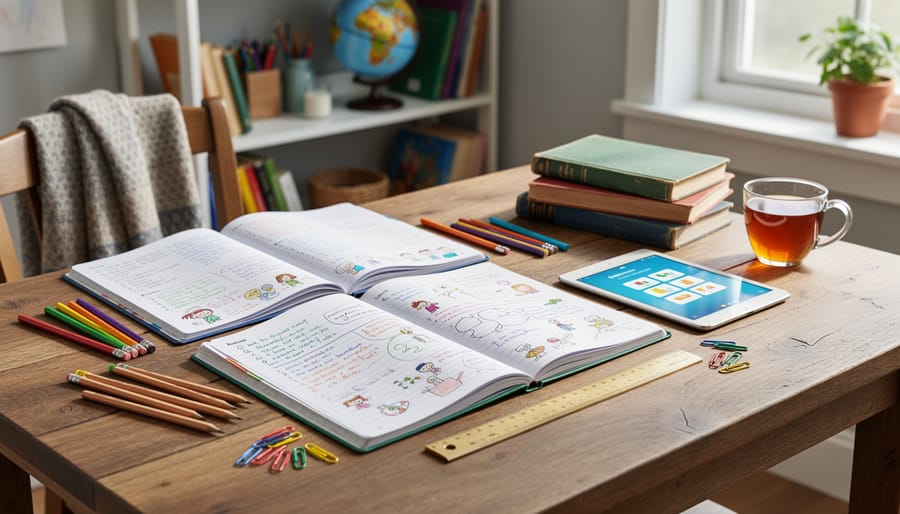
The Simple Daily Log (For Busy Parents)
When I first started homeschooling, my days felt like controlled chaos. The thought of writing detailed reflections about our learning journey? Laughable. That’s when I discovered the simple daily log, literally just jotting down what we did in five minutes or less.
My early entries looked like this:
Monday, October 12
– Read two chapters of Charlotte’s Web
– Math: fractions with measuring cups (made cookies!)
– Ben asked why leaves change color, watched nature video
– Meltdown over handwriting practice (again)
Wednesday, October 14
– Finished Egypt chapter, built cardboard pyramid
– Spelling test: 7/10
– Library trip, checked out 6 books on volcanoes (his new obsession)
– Played outside 2 hours
Notice what’s missing? Perfect grammar. Complete sentences. Pinterest-worthy descriptions. These weren’t journal entries for anyone else, they were my sanity keepers.
The magic of this approach is its sustainability. You’re not writing an essay about each day’s educational philosophy. You’re capturing the highlights and lowlights in real time, usually while standing at the kitchen counter. Over time, these simple lists revealed patterns I’d never have noticed otherwise, like how every science breakthrough happened during cooking, or how Ben’s meltdowns always preceded major developmental leaps.
Start here if the word “journal” makes you want to hide.
Reflection Journals (For the Thoughtful Parent)
Some parents need more than a daily checkbox, they need space to think through *why* their homeschool looks the way it does. That’s where reflection journals shine.
Instead of recording every subject you covered, you’re writing monthly (or whenever feels right) about the bigger picture. What’s clicking with your kids right now? What curriculum choices are falling flat? How are you feeling about this whole homeschooling adventure?
I started reflection journaling during a particularly chaotic season when we’d tried three different math programs in as many months. Writing helped me untangle my frustration and realize my daughter didn’t need a different program, she needed more hands-on activities before tackling abstract concepts. That clarity only came from sitting with my thoughts on paper.
These journals capture your growth as a homeschool parent, not just your children’s progress. You’ll spot patterns you’d otherwise miss: maybe your son always resists learning in the morning but thrives after lunch, or your formal lesson plans work beautifully in winter but feel suffocating come spring.
The narrative style makes these entries precious to revisit years later. You’re not just documenting what happened, you’re preserving your evolving homeschool philosophy and the emotional journey that shaped your family’s education.
Student Journals (Giving Kids Their Voice)
I handed my then-eight-year-old daughter a simple notebook and said, “Write about what you learned today.” Her first entry was three sentences and a doodle. But something shifted. She started noticing what she was learning.
Student journals give children ownership of their education in a way parent record-keeping can’t. They practice writing naturally, without the pressure of formal assignments. More importantly, they develop self-awareness about their own learning, what clicked, what confused them, what they want to explore more.
For younger children (ages 6-9), keep it simple. One or two sentences about their favorite part of the day, maybe a picture. Don’t correct spelling or grammar here; this is their space. As they get older, encourage questions they’re wondering about, connections between subjects, or even complaints about what didn’t work.
My teenagers now look back through their old journals and laugh at what fascinated them years ago. They see their own growth in ways test scores never showed.
The key is making it theirs, not another assignment you grade. Some weeks my kids write daily. Other weeks, nothing. That’s fine. The habit of reflection matters more than perfect consistency.
What to Actually Write in Your Homeschooling Journal
Staring at a blank page wondering what counts as “journal-worthy” can stop you before you even start. Here’s the truth: the most valuable entries in your homeschooling journal aren’t the ones documenting curriculum completion. They’re the moments that reveal your children’s actual learning journey.
Start with what I call “aha moments.” When your daughter suddenly understands fractions because she’s halving a cookie recipe, write it down. When your son who struggled with reading devours his first chapter book in two days, capture that. These breakthroughs matter more than checking off lesson 47.
Don’t underestimate the power of recording the funny stuff. My journals are full of ridiculous questions my kids asked: “If George Washington’s teeth were wooden, did he get splinters?” or “Can you homeschool a hamster?” Years later, these entries bring back entire days I’d otherwise forget. They also remind you that curiosity is learning, even when it looks nothing like a textbook.
Write down the struggles too. “Math was a battle today. We both ended up in tears.” You’re not documenting failure; you’re creating a record that helps you spot patterns. When you review later, you might notice math struggles always hit after lunch, or that certain approaches consistently fail while others work.
Field trips and hands-on experiences deserve real estate in your journal. Jot down what your kids actually noticed at the science museum, not what the exhibit was supposed to teach. Their observations often reveal more about their learning style than any formal assessment.
Track the questions they ask independently. “Why is the sky blue?” leads to an afternoon of research. “How do bridges stay up?” sparks a week-long engineering unit. These questions show you where natural curiosity is pulling them, which is often where the deepest learning happens.
Note seasonal rhythms and energy shifts. “Everyone’s distracted this week, spring fever hitting hard” or “November slump setting in.” Recognizing these patterns helps you adjust expectations rather than fighting against natural cycles.
Finally, record changing interests. When dinosaurs give way to astronomy, or art suddenly captures their attention, write it down. These shifts aren’t distractions from learning. They are learning.
Starting Your Homeschooling Journal (Even If You’re Already Mid-Year)
Here’s the truth about starting a homeschooling journal: the best time was when you began homeschooling, but the second-best time is right now. It doesn’t matter if you’re in January or June, if you’ve been homeschooling for six months or six years. I started our family’s journal three years into our journey, and I only wish I’d begun sooner.
The biggest mistake I see parents make? Waiting for the “right” moment or the “perfect” system. There isn’t one. Your journal doesn’t need to be beautiful, comprehensive, or look like anything you’ve seen on social media. It just needs to exist and work for your actual life.
Here’s how to start without the overwhelm:
- Pick your medium based on what you’ll actually use. I love the feel of paper, but my scattered brain needed digital. A notes app on my phone meant I could jot things down between dishes and laundry. If you’re a notebook person, keep one in your teaching space. There’s no wrong choice.
- Decide on a realistic frequency. Daily feels ambitious when you’re drowning in math lessons and sibling squabbles. I started with Friday afternoons, one weekly reflection while the kids had free time. You might prefer quick daily notes or monthly deep dives. Match your rhythm, not someone else’s.
- Commit to just 3-5 minutes initially. Set a timer if it helps. Write three sentences. That’s it. “Today we finally cracked long division. Sam asked amazing questions about volcanoes. I yelled less than yesterday.” Progress, not perfection.
- Create a consistent trigger. I journal right after lunch cleanup on Fridays. The routine matters more than the length. Link it to something you already do reliably.
- Give yourself ridiculous amounts of grace on missed days. Life happens. Skip a week? Start fresh next time without guilt or catch-up pressure. Your journal serves you, not the other way around.
The secret to making journaling stick isn’t discipline, it’s lowering the bar until it becomes effortless. Start small enough that you can’t fail, then build from there.
Using Your Journal to Track Real Progress (Beyond Test Scores)
Tests and assessments have their place, but they’ll never show you the full picture of your child’s growth. I discovered this truth when I started flipping back through months of our journal entries one quiet evening. The patterns that emerged told a completely different story than any standardized test could capture.
My daughter’s evolution as a reader jumped off the pages, not through reading level scores, but through her questions. In September, she asked “Can we stop now?” after fifteen minutes. By December, I’d written “Didn’t notice forty minutes had passed, asked if we could finish the chapter.” That shift from resistance to absorption? No bubble test measures that transformation.
Character development shows up in unexpected ways when you review entries over time. I noticed my son’s increasing willingness to tackle difficult problems without melting down, his patience with his younger sister during our read-alouds, his excitement when he finally mastered long division after weeks of struggle. Those victories matter more than any grade could reflect.
Research on reflective journals for learning confirms what I experienced: documenting the learning process reveals metacognitive growth that formal assessments miss entirely.
The curiosity expansion thrilled me most. Looking back, I could trace how my daughter’s fascination with horses led to reading about animal anatomy, which sparked questions about human biology, which turned into a months-long deep dive into how the body works. That organic learning journey, the kind homeschooling makes possible, only became visible when I reviewed our journal.
When you’re in the thick of homeschooling and doubt creeps in, your journal becomes evidence. Not that every day was magical, but that real learning happened. That your children grew braver, kinder, more curious. That mastery built gradually through repetition and patience. These truths hide in daily chaos but reveal themselves beautifully when you look back through your entries.
Your journal tracks what actually matters, the development of whole humans, not just test-takers.
Common Journaling Pitfalls (And How to Avoid Them)
I’ve been there, I’ve abandoned journals, beaten myself up over blank pages, and felt like a failure when other homeschool moms’ journals looked like scrapbooking masterpieces while mine resembled grocery lists. Let me share what I learned about keeping these pitfalls from derailing your journaling practice.
The biggest trap? Perfectionism. I wasted months not starting because I wanted the “right” journal, the perfect system, entries worth sharing on Pinterest. Here’s the truth: my most valuable journal is a beat-up notebook with coffee stains and terrible handwriting. It documents our real life, not some curated version. Start with whatever’s handy, a spiral notebook, a notes app, even voice memos you transcribe later. Progress over perfection, always.
Comparison is another silent killer. I once saw a homeschool mom’s gorgeous bullet journal with color-coded sections and detailed lesson plans, and immediately felt inadequate. Then I reminded myself: her children aren’t my children, her homeschool isn’t my homeschool. Your journal serves your family’s needs, not Instagram’s expectations. If bullet points work better than paragraphs, embrace that. If you only journal during tough weeks when you need perspective, that’s legitimate too.
The guilt about gaps nearly made me quit entirely. I’d miss a week, feel like the whole system was ruined, and give up completely. Now I just write the date and keep going. Those gaps? They tell a story too, probably about a chaotic but wonderful season. Our journals don’t need to be perfect chains of daily entries. They need to capture enough of our journey that we can look back and see how far we’ve come. That happens whether you write daily or monthly, in complete sentences or scattered notes.

Looking back through my homeschooling journals from the past decade feels like opening a treasure chest I didn’t know I was building. There are the funny misspellings my daughter made at seven, the day my son finally understood fractions, and entries from weeks when I wrote simply “survived” because that’s all I could manage. Every page reminds me that our homeschooling journey has been richer and more successful than my worried brain often tells me in the moment.
Your homeschooling journal doesn’t need to be beautiful, consistent, or impressive. It just needs to exist. Those scribbled notes about today’s breakthrough or today’s struggle will become breadcrumbs leading you back to perspective when you need it most. They’ll prove to you, in your own handwriting, that you’re doing better than you think.
Start simple this week. Grab whatever notebook is handy, open a document on your phone, or use the notes app you already have. Write one thing about today. Maybe it’s what you covered, maybe it’s a funny thing your child said, maybe it’s just that you showed up and tried. That single entry is enough to begin.
The most powerful gift my homeschooling journals have given me isn’t perfect record-keeping. It’s the undeniable evidence, written in real time, that we’re making progress even when it doesn’t feel like it. Your future self will thank you for starting today.