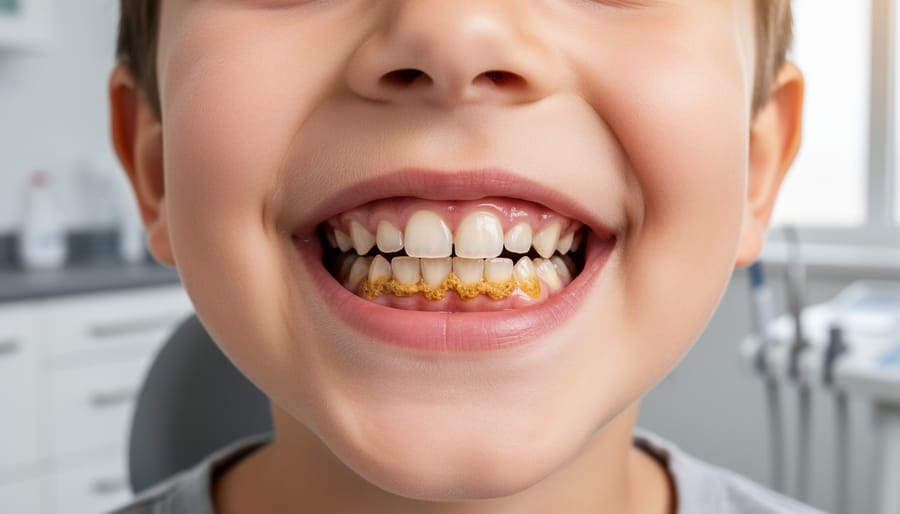
A calculus bridge is a thick, hardened buildup of tartar that forms across multiple teeth, creating a solid ridge of yellowish-brown or dark deposits along the gum line. If you’ve spotted something that looks like a crust connecting your child’s teeth, you’re likely dealing with this condition, and while it’s alarming to discover, it’s treatable with professional dental care and completely preventable with the right home routine.
I remember the first time I saw calculus bridge mentioned in a dental pamphlet. The name sounds intimidating, almost academic, but it’s simply what happens when plaque hardens into tartar and continues to accumulate over months or years without proper removal. Unlike soft plaque that your child can brush away, tartar becomes cement-like and requires a dentist or hygienist to remove it with specialized tools.
The bridge forms when tartar deposits on neighboring teeth grow together, creating that distinctive connected appearance. It most commonly appears on the inner surface of the lower front teeth, where saliva deposits minerals quickly, though it can develop anywhere in the mouth.
For homeschooling families, dental health sometimes slides down the priority list when you’re managing lesson plans, field trips, and the dozen other responsibilities on your plate. I get it. But here’s the reassuring part: once you understand what causes calculus bridge and establish a simple daily routine, you can prevent it entirely. Your child doesn’t need perfect technique or expensive equipment, just consistency with basic brushing and flossing, plus regular dental cleanings every six months.
What Exactly Is a Calculus Bridge? (And Why It Sounds Scarier Than It Is)
A calculus bridge sounds intimidating, doesn’t it? When I first heard the term, I pictured something out of a math textbook or a complex dental procedure. The reality is much simpler and less frightening than the name suggests.
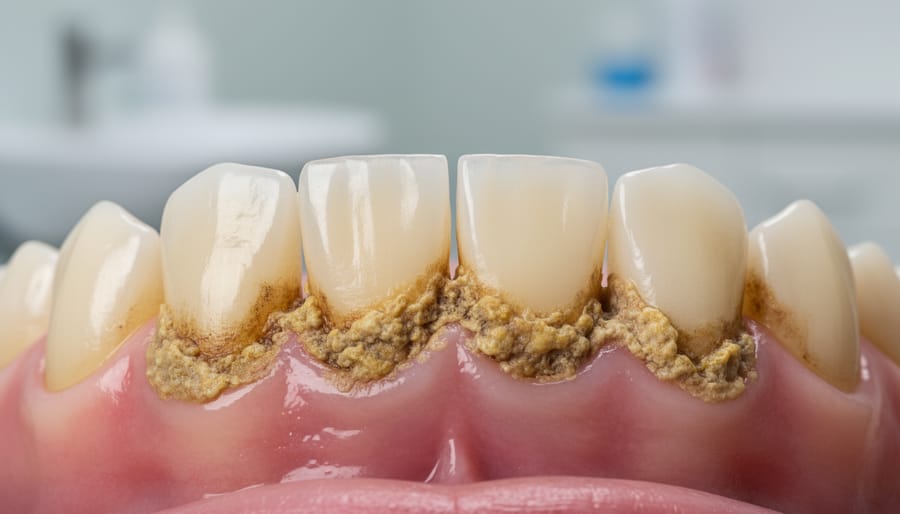
Here’s what’s actually happening: a calculus bridge is hardened plaque that’s formed a crusty ridge across several teeth, usually right along your gumline. It’s called a “bridge” because it literally connects teeth together with a continuous band of mineralized buildup. Think of it like the hard, chalky deposits that form inside an old teakettle, similar process, different location.
Let’s back up for a second. You’re probably familiar with plaque, that sticky film that coats teeth between brushings. It’s soft, whitish or yellowish, and your toothbrush can remove it pretty easily. When plaque isn’t brushed away regularly, minerals from saliva start hardening it into something called calculus or tartar. This hardened version is rough, typically brown or tan colored, and can’t be brushed off with a regular toothbrush no matter how vigorously you try.
Calculus is essentially mineralized plaque that has hardened into a cement-like substance bonded to the tooth surface.
When enough of this hardened buildup accumulates and spreads across multiple teeth in a continuous line, it forms what dentists call a calculus bridge. It’s most common on the lower front teeth or along the back molars where saliva pools and brushing sometimes gets rushed or skipped.
The good news? While it looks and sounds serious, it’s a fixable problem. Your dentist can remove it with professional tools during a cleaning. The name might sound dramatic, but understanding what you’re dealing with makes it much less scary.
How Does This Happen? (The Build-Up Nobody Warns You About)
It starts innocently enough. Your child skips a thorough brushing one night because they were exhausted after a long day of lessons and projects. Maybe they rush through it the next morning. The sticky film of plaque, basically bacteria and food particles, begins coating their teeth, especially near the gumline where brushing often misses.
Here’s where it gets sneaky. If that plaque isn’t removed within about 24 to 48 hours, minerals from saliva start hardening it into calculus. It’s like how water deposits leave crusty white rings on your faucet, except this is happening on teeth. Once plaque mineralizes into calculus, your child’s toothbrush becomes useless against it. It’s too hard, too stuck.
As more days pass with inconsistent brushing, that calculus grows. It spreads from one tooth to the next along the gumline until it forms a continuous crusty ridge, the calculus bridge. This can happen surprisingly fast, sometimes within just a few weeks of inconsistent dental care.
Children and teens are particularly vulnerable. Their diets tend to include more sugary snacks and drinks, which feed plaque-producing bacteria. If your child has braces, the brackets and wires create perfect hiding spots where plaque can mineralize undisturbed. Even genetics play a role, some kids simply produce more mineral-rich saliva that speeds up calculus formation.
I’ll be honest: with the chaos of homeschool mornings, making breakfast, organizing lessons, settling sibling disputes, it’s easy to let dental supervision slide. You assume your eleven-year-old is brushing properly because they’re in the bathroom with the water running. You don’t realize they’re doing a quick ten-second swish until you spot that telltale brown crust months later.
The good news? Understanding this progression means you can interrupt it before it becomes a bridge.
Why Homeschooling Parents Should Pay Extra Attention
As homeschooling parents, we wear every hat imaginable. We’re the teacher, the guidance counselor, the PE coach, and yes, the health monitor too. While managing homeschool responsibilities can feel overwhelming at times, this comprehensive role actually gives us a significant advantage when it comes to our children’s health, including dental health.
Think about it. In traditional schools, there’s a school nurse who might spot issues during screenings. Kids compare notes at lunch about trips to the dentist. Teachers notice if a child’s breath is consistently bad or if they’re avoiding smiling. These informal checkpoints happen without parents even realizing they exist.
At home, we don’t have those built-in safety nets. Our kids aren’t lining up for health screenings or getting casual dental health reminders from anyone but us. They’re not seeing their classmates’ pristine teeth after a cleaning or hearing stories about cavities at recess. If we’re not actively watching for issues like calculus bridge, they can develop quietly while we’re focused on fractions and phonics.
But here’s the empowering part: we see our children every single day, all day long. We’re there during teeth-brushing time. We notice changes in habits, diet, and yes, oral health. This constant presence means we can catch issues earlier than they might be spotted in a traditional school setting, if we know what to look for.
This isn’t another burden on your already-full plate. It’s simply being aware. When you understand what a calculus bridge is and how to prevent it, you’re equipped to protect your child’s dental health just as intentionally as you approach their education.
What You Can Do to Prevent a Calculus Bridge in Your Homeschool Routine
The good news? Preventing a calculus bridge is entirely within your control as a homeschooling parent. You’re already managing lesson plans, educational goals, and daily routines, adding dental health habits into that framework is simpler than you might think.
The foundation is consistent daily care, and I’ve found that treating dental hygiene like any other non-negotiable subject makes all the difference. Here’s what actually works:
- Brush at least twice daily, morning and bedtime, no exceptions, just like you wouldn’t skip math
- Choose fluoride toothpaste to strengthen enamel and make teeth more resistant to plaque buildup
- Floss once daily to remove debris between teeth where brushes can’t reach
- Rinse with antiseptic mouthwash to kill bacteria and reduce plaque formation
I know what you’re thinking, easier said than done. But incorporating these habits into your homeschool day is more manageable than it sounds. The same homeschool cleaning schedule principles that keep your learning space functional apply here: consistency beats perfection.
Start by anchoring dental care to existing routines. We brush right after breakfast cleanup, before morning lessons begin. It’s part of the “get ready to learn” sequence, just like getting dressed and making beds. The evening brushing happens after dinner, before free reading time. Creating these natural transitions removes the daily negotiation.
With fluoride toothpaste, let your kids choose their own flavor at the store. That small bit of ownership reduces resistance dramatically. For flossing, I keep the individual flossers (the ones with handles) in a jar on the bathroom counter, they’re far more approachable for kids than traditional floss, especially when they’re learning.
The antiseptic mouthwash can wait until they’re old enough not to swallow it, usually around age six or seven. When you introduce it, make it a reward for completing thorough brushing and flossing.
Here’s where homeschooling truly shines: you can weave dental health into your curriculum. Study tooth anatomy during biology. Calculate how many times they’ll brush their teeth in a year during math. Research the history of toothbrushes for a social studies project. This contextual learning makes the daily habits meaningful rather than mindless.
The same homeschool planning tips you use for academics apply here, break the goal into small daily actions, track progress, and celebrate consistency. A simple chart on the bathroom wall works wonders.

Making Dental Care Part of Your Homeschool Day (Real Strategies That Work)
When we started homeschooling, I added dental care to our morning routine the same way I added math, as a non-negotiable part of our day. Just like you wouldn’t skip teaching reading because your child wasn’t in the mood, teeth brushing became one of those foundational habits we protect.
I’ll be honest: it took some trial and error. My youngest used to disappear when it was time to brush. What finally worked was treating dental hygiene like any other subject we’re intentional about. We brush right after breakfast cleanup, before we crack open any books. It’s literally on our daily schedule between “breakfast” and “morning basket.” That consistency removed all the negotiating.
The timer trick changed everything for us. We set a two-minute timer (you can find kid-friendly ones that play music), and suddenly brushing became finite instead of feeling endless to a seven-year-old. For my older kids, we created a simple responsibility chart where they initial off their morning and evening brushing. They’re learning accountability, which is part of our homeschool values anyway.
Here’s where homeschooling gives us an advantage: we turned dental health into actual learning. During our biology unit, we looked at bacteria under a microscope and discussed how plaque forms. My middle daughter still remembers seeing those bacterial colonies, it made the abstract idea of “brush your teeth” suddenly very real and personal.
When kids resist (and they will), I’ve found empathy works better than lectures. “I know it feels like a hassle right now, but healthy teeth mean you can eat all your favorite foods without pain for your whole life.” Just like our starter homeschool guide emphasizes building routines gradually, dental care becomes easier when it’s just what we do every day, not something we debate.
When to See a Dentist (And What They’ll Do)
If you spot that crusty brown ridge forming across your child’s teeth, it’s time to schedule a dental appointment. Here’s the reality: once plaque has mineralized into calculus, no amount of brushing at home will remove it. It’s chemically bonded to the tooth enamel and requires professional instruments to safely scrape away.
During a professional cleaning, the dental hygienist uses specialized scalers to break up and remove the hardened deposits. Yes, it makes that distinctive scraping sound, and yes, your child might feel some pressure or slight discomfort, especially if the buildup is significant. But the process itself isn’t painful for most kids. The hygienist works carefully along the gumline, removing the calculus and then polishing the teeth smooth to make it harder for new plaque to stick.
If your child feels anxious about dental visits, talk openly with the dentist’s office beforehand. Many practices now offer kid-friendly explanations, let children hold a mirror to watch, or use gentle numbing gel for sensitive areas. I’ve found that explaining what will happen in simple terms before we even leave the house helps tremendously.
Don’t wait until you see visible buildup to book appointments. Regular dental checkups every six months catch calculus formation early, often before it becomes a bridge. Think of these visits as preventive maintenance, not emergency repairs. Your dentist becomes a partner in your child’s health education, reinforcing the daily habits you’re building at home.

You’ve got this.
Managing dental health is just one more piece of the homeschooling puzzle, and honestly, it’s one of the simpler ones. You’re already teaching math, planning field trips, and navigating state requirements, adding a few minutes of intentional dental care to your daily routine? Completely doable.
The beauty of homeschooling is that we get to be intentional about everything, including the habits our kids build around their own health. Those two minutes of proper brushing, the quick floss before bed, the fluoride toothpaste you choose, they’re not just preventing crusty tartar. They’re teaching your children that their wellbeing matters and that small, consistent actions create real results.
If you spot that brown ridge along the gumline, don’t panic. Schedule a cleaning, adjust your routine, and move forward with the knowledge you now have. This is what we do as homeschooling parents, we learn, we adapt, and we equip our kids with what they need to thrive.
And the truth is, healthy habits formed at home during these years will serve your children far longer than any single lesson plan ever could.