
The tesamorelin research peptide contains a specific chemical alteration that transforms how the body recognizes and processes this synthetic growth hormone-releasing hormone. Scientists added a hexenoyl group, a six-carbon fatty acid chain, to the first amino acid of the naturally occurring GHRH 1-44 peptide sequence. This single modification dramatically extends the peptide’s half-life in the bloodstream and protects it from rapid enzymatic breakdown.
Here’s what makes this change remarkable: without the hexenoyl modification, naturally occurring GHRH would degrade within minutes of entering your body, making it practically useless as a therapeutic agent. The fatty acid attachment acts like a protective shield, allowing the peptide to circulate longer and bind more effectively to growth hormone-releasing hormone receptors in the pituitary gland.
You’re probably encountering this term because you’re researching peptide therapies, reading clinical studies, or trying to understand what makes tesamorelin different from other GHRH analogs. The modification isn’t just technical jargon. It explains why this particular compound succeeded where earlier versions failed.
Think of the hexenoyl group as a molecular anchor that keeps the peptide stable and functional. The modification doesn’t change what the peptide does, it changes how long it can do it. This distinction matters when you’re evaluating research claims, understanding dosing protocols, or comparing different peptide formulations. The science behind peptide modifications reveals why some synthetic compounds work better than their natural counterparts, and why structural changes at the molecular level translate into meaningful differences in biological activity.
Understanding GHRH 1-44: The Foundation
Your body has a built-in communication system that tells different organs what to do, and Growth Hormone-Releasing Hormone, or GHRH 1-44, is one of those important messengers. Think of it like a supervisor sending instructions to workers, in this case, the supervisor (GHRH 1-44) tells your pituitary gland to release growth hormone, which affects everything from how children grow taller to how adults maintain muscle and bone strength.
The “1-44” part might sound technical, but it simply refers to the number of amino acids (the building blocks of proteins) linked together in this hormone’s natural chain. These 44 amino acids work together like beads on a necklace, each one contributing to the hormone’s ability to do its job. When GHRH 1-44 stimulates GH release from the pituitary gland, it sets off a cascade of effects throughout the body that influence metabolism, tissue repair, and overall vitality.
Scientists study GHRH 1-44 because understanding how this natural hormone works helps them develop treatments for conditions where the body’s signaling system isn’t functioning properly. It’s similar to how studying the way a healthy immune system fights infections helps researchers create better vaccines. By understanding the natural messenger, scientists can potentially help people whose bodies need support with growth, metabolism, or tissue health.
For parents, knowing about GHRH 1-44 provides context for understanding modified versions like Tesamorelin. It’s the foundation, the original blueprint, that scientists worked from when creating therapeutic alternatives designed to last longer or work more efficiently than what nature provides.
What Makes Tesamorelin Different: The Analog Concept
Think of an analog as a recipe that’s been tweaked to work better. When you’re baking bread and realize your loaf goes stale too quickly, you might add ingredients that help it stay fresh longer while keeping that same delicious taste. That’s essentially what scientists do when they create an analog, they start with something natural that works well, then make carefully chosen modifications to solve specific problems.
In this case, Tesamorelin is an analog of the natural hormone GHRH 1-44. Scientists kept the core structure that makes GHRH effective but added modifications to address a major challenge: natural GHRH breaks down extremely quickly in the body, often within minutes. Imagine trying to deliver an important message, but your messenger can only last five minutes before disappearing. That’s the problem researchers faced with natural GHRH, it simply didn’t stick around long enough to be practical for medical use.
The development of Tesamorelin addressed this breakdown problem head-on. Researchers needed a version that could survive in the bloodstream long enough to reach its destination and do its job effectively. Think of it like putting a protective case on your phone, the phone still works the same way, but now it can withstand bumps and drops that would have damaged it before. The analog modification gives the peptide that same kind of protection against the body’s natural processes that would otherwise degrade it too rapidly.
This stability matters tremendously for anyone considering peptide-based treatments. A medication that degrades in minutes isn’t practical for consistent use or reliable results. By creating Tesamorelin as a GHRH analog, scientists transformed a promising but impractical natural substance into something that could actually help people, though as we’ll explore in later sections, understanding exactly how those protective modifications work helps you evaluate claims about these therapies more critically.
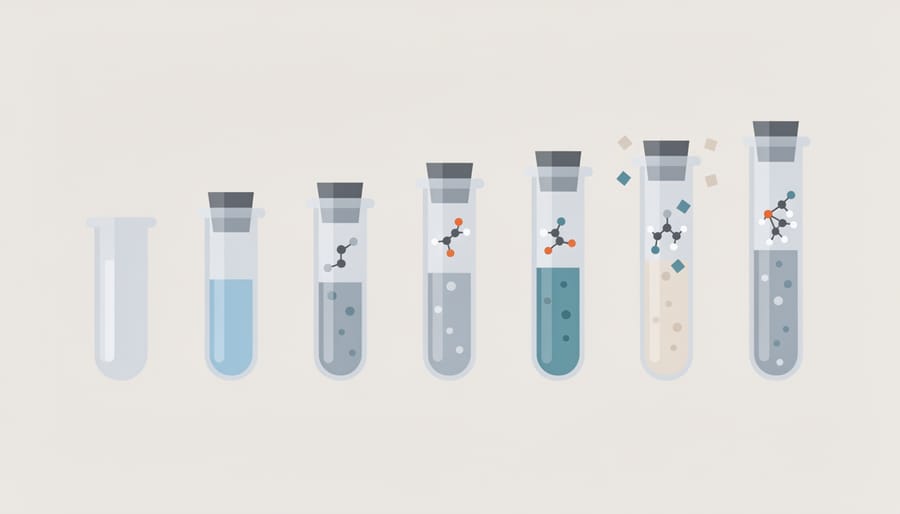
The Hexenoyl Modification: How It Works
Why Stability Matters in Peptides
Think of peptides like fresh-picked strawberries. Without protection, they start breaking down the moment they leave the plant. Natural peptides in our bodies face a similar challenge, they degrade quickly because that’s how our system regulates hormones. This rapid breakdown works fine for substances our bodies produce constantly, but it creates a problem when we’re trying to use peptides as medications.
When scientists develop peptide therapies, they need these molecules to last long enough to actually do their job. A peptide that breaks down in minutes won’t have time to reach its target and produce the desired effect. This is where modifications come in, they’re like the refrigeration and packaging that keeps those strawberries fresh longer.
The practical implications matter for families considering any peptide-based treatment. A more stable peptide means fewer doses, more predictable effects, and potentially better results. Without modifications like the hexenoyl group, many peptide medications would require constant administration or wouldn’t work at all. The modification doesn’t change what the peptide does, it just gives it enough time to do it.
This stability challenge explains why natural GHRH 1-44 doesn’t work as a medication but modified versions like Tesamorelin can.

The Science Made Simple
Think of the hexenoyl group as a protective handle attached to the GHRH molecule, like adding a sturdy grip to a delicate glass ornament so you can hold it safely without breaking it.
Here’s what happens: Scientists take the natural GHRH 1-44 peptide (which your body makes) and chemically attach a small fatty chain called hexenoyl to one specific spot on the molecule. This fatty chain has six carbon atoms linked together in a particular way. Imagine snapping a LEGO piece onto a specific spot on your base structure, it changes how the whole thing behaves.
The hexenoyl group serves two main purposes. First, it makes the molecule “stickier” in a helpful way, it can bind to proteins in your blood, which keeps it from being broken down too quickly. Second, this fatty addition changes the molecule’s shape slightly, making it harder for enzymes (the body’s molecular scissors) to cut it apart.
Without this modification, natural GHRH gets destroyed within minutes in your bloodstream. With the hexenoyl handle attached, Tesamorelin can remain active for hours instead. It’s similar to wrapping a sandwich in wax paper, the sandwich is still the same food, but now it’s protected from getting squished or drying out during transport.
The actual chemistry involves precise molecular bonds, but for parents evaluating health information, what matters is understanding why this modification exists: extended protection means the medication works longer from a single dose.
Research and Medical Context for Families

You might stumble across Tesamorelin and its hexenoyl modification in several contexts as a parent navigating health information for your family. Medical research databases, specialized treatment discussions, or health forums focused on growth hormone therapies are common places where this peptide analog appears. Sometimes it surfaces in conversations about lipodystrophy treatments, where Tesamorelin has FDA approval for specific applications. Other times, you’ll see it mentioned in broader discussions about peptide therapies or growth hormone research.
Understanding where this information lives helps you assess its reliability. Academic research papers offer peer-reviewed findings but often use dense technical language. Health forums provide real experiences but mix personal anecdotes with varying levels of accuracy. Medical websites aimed at patients bridge these worlds, translating research into accessible terms while maintaining scientific rigor.
The research landscape around GHRH analogs like Tesamorelin continues evolving, with scientists exploring how peptide modifications affect therapeutic outcomes. Studies examine the hexenoyl modification’s role in extending peptide activity and improving treatment consistency. This ongoing research means what we know about these compounds grows and changes, making it essential to look at publication dates and source credibility.
Here’s what matters most: encountering scientific terms like hexenoyl modification in your reading doesn’t mean you need to become an expert or make medical decisions based on that information alone. Think of understanding these concepts as building your health literacy toolkit. Just as we teach our homeschoolers to evaluate sources and ask good questions, we apply those same skills to family health decisions.
No online article, including this one, replaces personalized medical guidance. When peptide therapies or specialized treatments come up in your family’s health journey, bring your questions and this foundational knowledge to qualified healthcare providers. They can translate research into recommendations specific to your situation, considering factors no general article can address.
What Parents Need to Consider
When you encounter information about Tesamorelin or other peptide therapies, approach it the same way you’d evaluate any curriculum or learning material, with healthy skepticism and a commitment to evidence-based planning. Start by considering the source: peer-reviewed medical journals carry more weight than blog posts or social media claims. Look for research published by reputable institutions and reviewed by qualified experts in endocrinology or peptide science.
Red flags in online health claims include promises of miraculous results, pressure to purchase quickly, anecdotal success stories without scientific backing, and websites selling products while claiming to provide objective information. If a source vilifies conventional medicine or suggests you bypass healthcare providers, step back and seek balanced perspectives.
When you do speak with healthcare providers, ask the right questions: What does current research actually show about this peptide? What are the risks and limitations? How does it compare to established treatments? A good provider welcomes questions and acknowledges gaps in scientific knowledge rather than overstating certainty.
This process mirrors what we do as homeschooling parents when we teach research skills to our children, examining sources, questioning claims, distinguishing between correlation and causation, and building knowledge systematically. Your kids are watching how you navigate complex information, learning that responsible decision-making requires patience, critical thinking, and intellectual humility. Understanding the science behind terms like hexenoyl modification equips you to have informed conversations without pretending to replace specialized medical expertise.
Common Questions Parents Ask
Is Tesamorelin something I can buy over the counter?
No. Tesamorelin is a prescription medication requiring medical supervision, not available as a supplement. Any online seller claiming otherwise should be avoided.
Does the hexenoyl modification make Tesamorelin safer than natural GHRH?
The modification primarily extends how long the peptide stays active in the body, not necessarily making it safer. Safety depends on proper medical use, dosing, and individual health factors that only a healthcare provider can assess.
How does the modification affect what the peptide actually does?
The hexenoyl group acts like a protective shield that slows breakdown, allowing the peptide to work longer. The core function, signaling growth hormone release, remains the same as natural GHRH.
When should I talk to a doctor about peptide therapies?
Always consult a healthcare provider before considering any peptide therapy, especially if you’ve read about potential benefits online. They can assess whether it’s appropriate for your specific situation and explain legitimate medical applications versus unsupported claims.
How can I tell if research claims about Tesamorelin are credible?
Look for peer-reviewed studies from reputable medical journals rather than testimonials or marketing materials. Teaching your homeschooler to understand statistics helps the whole family evaluate health research more critically.
Why do I keep seeing this peptide mentioned in different health contexts?
Tesamorelin has been studied for specific medical conditions, which leads to discussion in various health communities. However, approved uses are limited and highly specific, most online mentions extend beyond what’s actually supported by evidence.
Are peptide analogs like this commonly used in medicine?
Yes, many medications are modified versions of natural substances. The modifications help overcome practical problems like rapid breakdown in the body, allowing for therapeutic use where the natural substance wouldn’t work effectively.
These questions reflect the real confusion parents face when scientific terminology intersects with health decisions. You’re not expected to become a peptide expert, but understanding the basics helps you navigate medical conversations more confidently.
The key takeaway here is simple: specialized medical terms don’t require specialized knowledge to approach wisely. Critical thinking, healthy skepticism about claims, and willingness to ask questions matter more than memorizing biochemistry. When you model this approach for your children, you’re teaching them invaluable skills for evaluating information throughout their lives.
Understanding scientific concepts like the Tesamorelin GHRH 1-44 hexenoyl modification might seem daunting at first, but you’ve just proven to yourself that complex ideas become manageable when broken down into understandable pieces. That’s a lesson worth sharing with your children as you navigate homeschooling and life together.
The same critical thinking skills you use when evaluating peptide research apply to countless family decisions. Whether you’re researching educational approaches, nutrition choices, or healthcare options, your willingness to dig deeper and ask questions serves your family well.
Remember that understanding the science doesn’t mean you need to become an expert in every field. It means you know how to ask the right questions, recognize credible information, and seek professional guidance when needed. These are exactly the thinking skills we hope to instill in our children through homeschooling.
Stay curious. Keep asking questions. And trust yourself to learn what you need to know when you need to know it. That mindset will serve both you and your children far beyond any single health decision or educational choice. You’re modeling lifelong learning in action, and that’s one of the most valuable lessons any parent can teach.