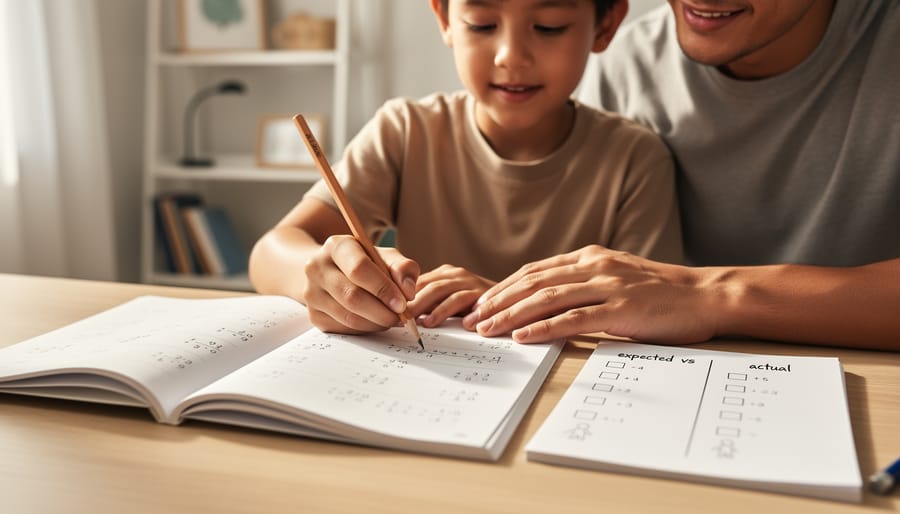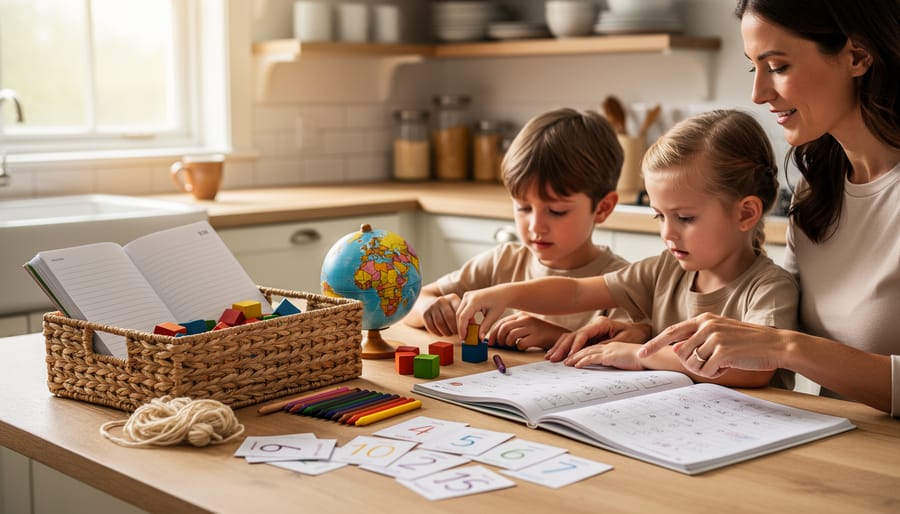
The homeschooling ideas on TikTok worth your time are the ones that lower stress and fit real life: morning baskets, loop scheduling, hands-on math with everyday objects, a five-minute reset, read-alouds, learning through errands and nature walks, and finding your people through hashtags and local groups. Each one takes minutes to try, costs next to nothing, and works whether you’re homeschooling a kindergartner or a middle schooler.
Here’s why this matters. Scroll for ten minutes and you’ll see color-coded classrooms, perfect lesson plans, and kids who somehow love every subject. It’s easy to feel behind. I felt that way too, early on, staring at a gorgeous planner setup at 11 p.m. and wondering why my kitchen table looked nothing like it.
What I learned is that the best ideas aren’t the prettiest. They’re the ones that make your days calmer and your kids curious.
Below, I’ll explain how I chose these seven, then walk you through each one so you can try something today.
How We Sorted the Helpful Homeschooling Tips from the Hype
Social media shows the highlight reel, so I never take a video at face value. Before any idea made this list, I ran it through a simple filter built on what I’ve seen work in real homeschool days, including my own kitchen table.
- Simple to start: you can try it in a single afternoon.
- Budget-friendly: it uses things you already have at home.
- Adaptable: it bends to different ages and learning styles.
- Focused on learning: it helps kids grow, not just look good on camera.
That last point matters more than you’d think. A beautifully styled setup can be lovely, but a tip earns its spot when it actually makes your day run smoother or your child’s lesson click. Plenty of creators share genuinely helpful ideas, and I’m grateful for them. I just filter for what holds up once the camera is off.
It’s also completely fine to adapt an idea instead of copying it. If a trend needs a few tweaks to suit your family, you’re doing it right. And if a tip tempts you to organize curriculum differently, you can fold it in without starting over.
7 Homeschooling TikTok Tips Parents Are Loving Right Now
1. Morning Baskets: Start the Day with Less Stress
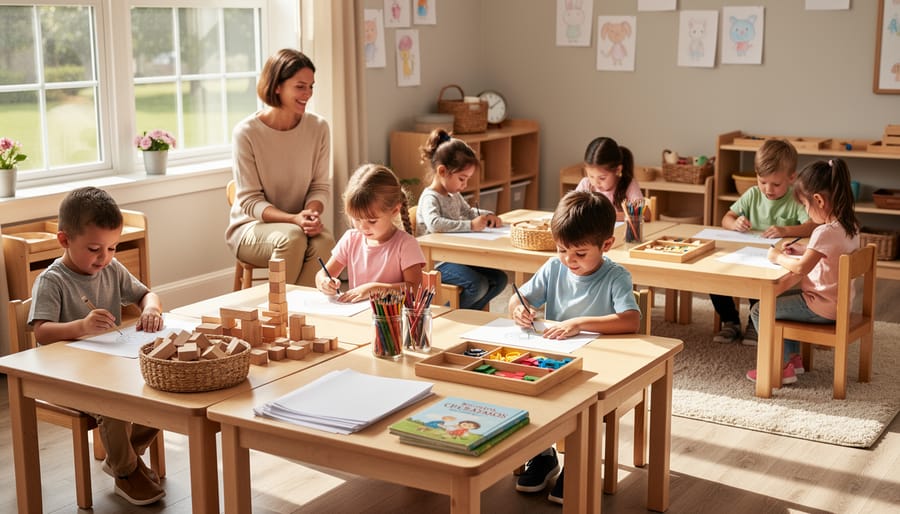
Here’s one of the simplest trends I’ve seen on homeschooling TikTok: the morning basket. You fill a basket with a few books, a small activity, and a snack for each child, then set it out before the day starts. The kids dive in while you pour your coffee, and mornings begin with calm instead of chaos.
I learned this the hard way. One school day, three kids were asking for breakfast at once, someone couldn’t find a pencil, and I hadn’t even opened my planner. The next night, I tossed a few picture books, a puzzle, and some crackers into a laundry basket. The next morning was so quiet I actually checked on them. That was the day I stopped fighting the start of our day and started setting it up.
You don’t need to buy anything. Raid your shelves and match the basket to your child’s age:
- Toddlers and preschoolers: board books, playdough, and a few sensory toys.
- Early elementary: picture books, a coloring page, and a simple puzzle or card game.
- Older kids: a chapter book, a journal with a writing prompt, and a brain teaser.
- Everyone: a snack and a water bottle so nobody wanders off hungry.
Swap a few items each week so the basket stays fresh. That’s really all it takes.
2. Loop Scheduling: A Gentler Way to Plan Your Week
Loop scheduling is one of those ideas that makes tired parents exhale. Instead of tying math to Monday and science to Tuesday, you write your subjects in a list and simply work through them in order, picking up right where you stopped. A missed day doesn’t put you behind, because the loop just waits for you.
Picture a loop with five items: read-aloud, math, writing, science, and art. Today you get through the first three before a toddler meltdown or a surprise errand ends the morning. Tomorrow you start at science. Nothing is “missed,” and nothing needs a guilt-ridden catch-up session.
Parents who feel overwhelmed by rigid timetables love this because it trades pressure for rhythm. You still show up and learn consistently, but real life gets a vote.
To set up your first loop:
– List four to six subjects or activities you want in your week.
– Put the must-dos, like math and reading, near the top so they come up often.
– Decide how much time each one gets, and keep it short for little learners.
– Use a sticky note or clothespin to mark where you left off.
If your child is just starting out, a simple kindergarten schedule can slot neatly into a loop, too. Start small, and adjust as you learn what your family’s days really look like.
3. Hands-On Math with Everyday Objects
Some of the most-shared homeschooling TikTok videos turn math into something kids can touch. You’ll see fractions taught with pizza slices, counting with LEGO bricks, and multiplication with muffin tins. These work because abstract numbers feel slippery to a young child, while a handful of crackers does not.
When a child physically splits a snack in half, then in quarters, the idea of a fraction stops being a symbol on a worksheet. The same goes for counting and multiplication. Kids can see the groups, move them around, and check their own answers.
Here are three easy ideas to try tonight:
– Fraction snack time: Give your child a sandwich or a banana and ask them to cut it into halves, then fourths. Ask which piece is bigger and why.
– LEGO multiplication: Build three towers with four bricks each, then count them all. Talk through “three groups of four” so the pattern sticks.
– Measuring cup math: While baking, let your child figure out how many quarter-cup scoops fill one full cup.
None of this needs special supplies. I once watched my own kids go from groaning at fractions to arguing over who got the “bigger half” of a cookie, and that argument taught more than any page of practice problems.
Start with whatever is already in your kitchen or toy bin, and keep it playful. If you’d like more ideas along these lines, our math category has plenty to explore.
4. The Five-Minute Reset When Learning Gets Bumpy
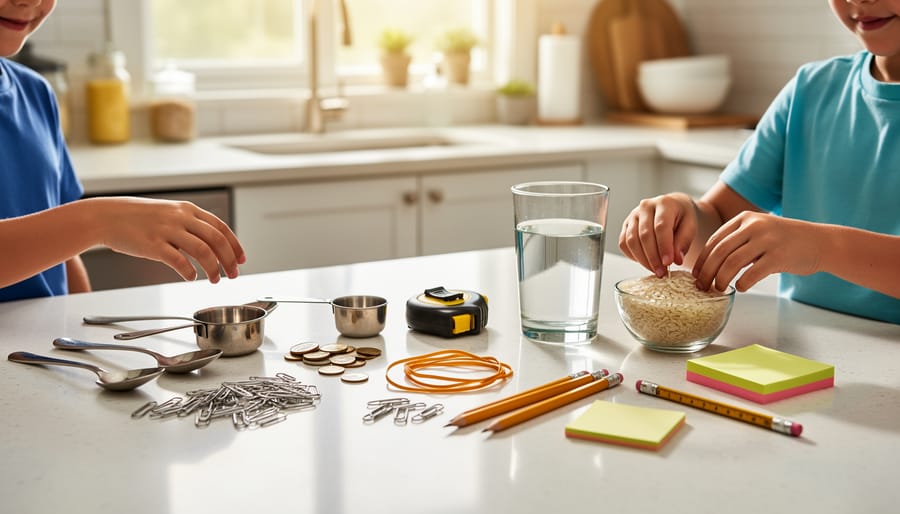
One of the most reassuring trends on homeschooling TikTok is also the simplest: when a lesson hits a wall, stop and take a five-minute reset. Creators show kids doing jumping jacks, stretching by an open window, sipping water, or taking a few slow belly breaths before going back to the work. No lecture, no guilt, just a pause.
I use this in my own homeschool all the time. Last winter my son was stuck on a page of spelling words, jaw tight, pencil pressed so hard it nearly tore the paper. A few years ago I would have said “just finish it.” Now I set a timer and we dance to one song in the living room. When we sat back down, he finished the page in about half the time it had taken him to get stuck.
That’s the surprise: short breaks often make lessons shorter overall. A frustrated brain isn’t learning much anyway, so a quick reset saves you the long, teary slog.
Try it this week:
– Keep a “reset menu” of three or four ideas, like stretching, a drink of water, or stepping outside.
– Let your child pick from the menu.
– Come back to the task gently, maybe with a smaller first step.
Taking a break isn’t giving up. It’s simply good teaching.
5. Read-Aloud Time as the Heart of Your Day
Scroll through homeschooling TikTok and you’ll notice something: so many families build their day around one cozy read-aloud. Think blankets on the couch, a plate of apple slices, and one parent reading while everyone else listens.
There’s real substance behind the charm. Research suggests that read-aloud improves oral language and kids pick up new words, practice listening, and build a shared story with you. That connection might be the biggest win of all.
Choosing books doesn’t need to be complicated. For little ones, grab picture books with rhythm and repetition. For elementary-age kids, chapter books with short chapters work well. For older kids, try an adventure or a classic they can chew on. Mixed ages? Pick a story that’s a little above the youngest and let the older ones enjoy it too.
If your schedule is tight, read-aloud fits beautifully into a lighter week, and our 3-day schedule system shows how to keep it as the steady anchor.
6. Learning Through Real Life: Errands, Cooking, and Nature Walks
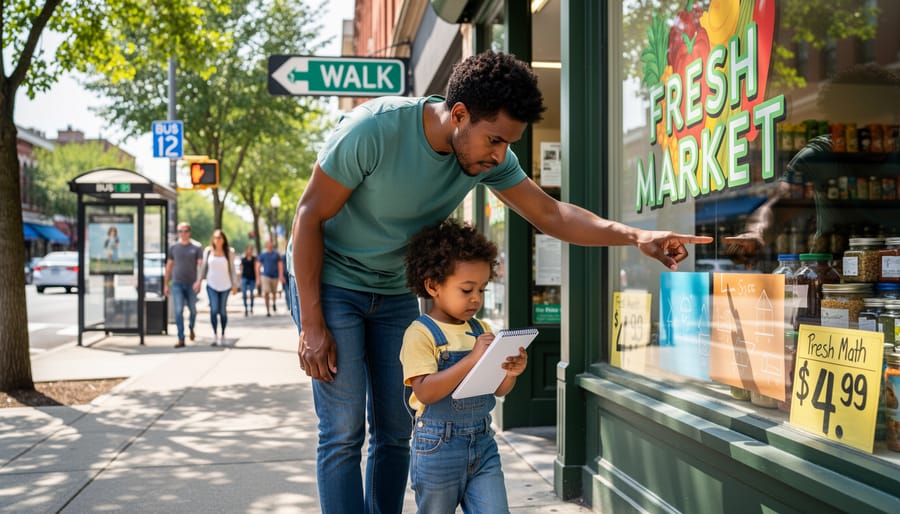
One of my favorite trends on homeschooling TikTok is also the least flashy: turning ordinary routines into lessons. Parents film themselves at the grocery store, in the kitchen, or on a trail, and the learning just happens along the way.
Try giving your child a small budget at the store and letting them compare prices, round up totals, and decide whether the bigger box is really the better deal. In the kitchen, double or halve a recipe and watch fractions become something you can taste. On a nature walk, challenge your kids to find five different leaf shapes or name three plants before you head home.
I’ll never forget a rainy Tuesday when my youngest asked why the puddles kept getting wider. We abandoned the planned lesson, grabbed boots, and spent an hour measuring puddles, dropping leaves to watch which way the water flowed, and sketching what we saw. She remembered more from that muddy hour than from any worksheet I’d printed that week.
If you ever worry that learning needs desks and a bell schedule to count, let that worry go. Kids are curious all day long, and your errands are full of real math, reading, and science.
7. Finding Your Community Through Homeschool Hashtags and Local Groups
Searching a few homeschooling hashtags is one of the easiest ways to find your people. Try phrases like #homeschoolmom or #homeschoolcommunity, then follow the creators who make you nod along and think, “I could do that.” The best accounts share real days, messy tables and all, and they cheer on newer parents instead of showing off.
Online encouragement often turns into real-world connection. Creators regularly mention local co-ops, park days, and library meetups in their comments or captions, and a friendly message to a nearby family can lead to your first in-person get-together. I found my first co-op that way, and my kids still talk about those park days.
Try to balance quick videos with longer reads, too. Many parents pair their feed with a few favorite homeschool blogs for deeper, step-by-step guidance. Together, they give you ideas, support, and a village to lean on.
Your Questions About Homeschooling Tips on Social Media
Social media is full of good ideas, but it’s also full of highlight reels. Here are the questions I hear most from parents just starting out.
Can I rely on TikTok alone to homeschool?
Think of it as a source of inspiration, not a full plan. Short videos are great for spark ideas like Morning Baskets or hands-on math, but you’ll still want a steady rhythm and some kind of curriculum or learning goals to build around them.
How do I know if a trend fits my child?
Try it once, low-stakes, and watch your child’s face. If they lean in, keep it. If they shut down, set it aside without guilt, because the best tip is the one your kid actually enjoys.
What if my day never looks like the videos?
Mine doesn’t either, and that’s completely normal. Those clips are a few polished minutes, not a full day, so judge your homeschool by how your family is growing, not by what’s on the screen.
How much screen time should I spend looking for ideas?
Keep it small. Fifteen minutes of scrolling to pick one idea for the week is plenty, and following only accounts that leave you feeling capable will keep the overwhelm away.
If a question here sounds like one you’ve been quietly asking yourself, you’re in good company. Every homeschooling parent has wondered whether they’re doing enough. Pick one idea, give it a fair try, and let your own family tell you what works.
Take What Works, Leave the Rest
Here’s the thing I wish someone had told me when I started: you don’t need to try all seven ideas. Pick one this week, maybe the morning basket or a few minutes of hands-on math with snacks, and let it fit your family’s rhythm instead of the other way around. If it flops, that’s useful information, not a failure.
Those polished videos are just a few seconds of someone’s day, and your real life with your kids is where the learning happens. You know your children better than any creator ever could, so trust that gut feeling. And if you’re still finding your footing, I’d love for you to browse our first-timer’s guide to homeschooling. You’ve got this, and I’m cheering you on.